How to Source Custom Metal Trinket Boxes:A B2B Buyer’s Guide
2026-11-26
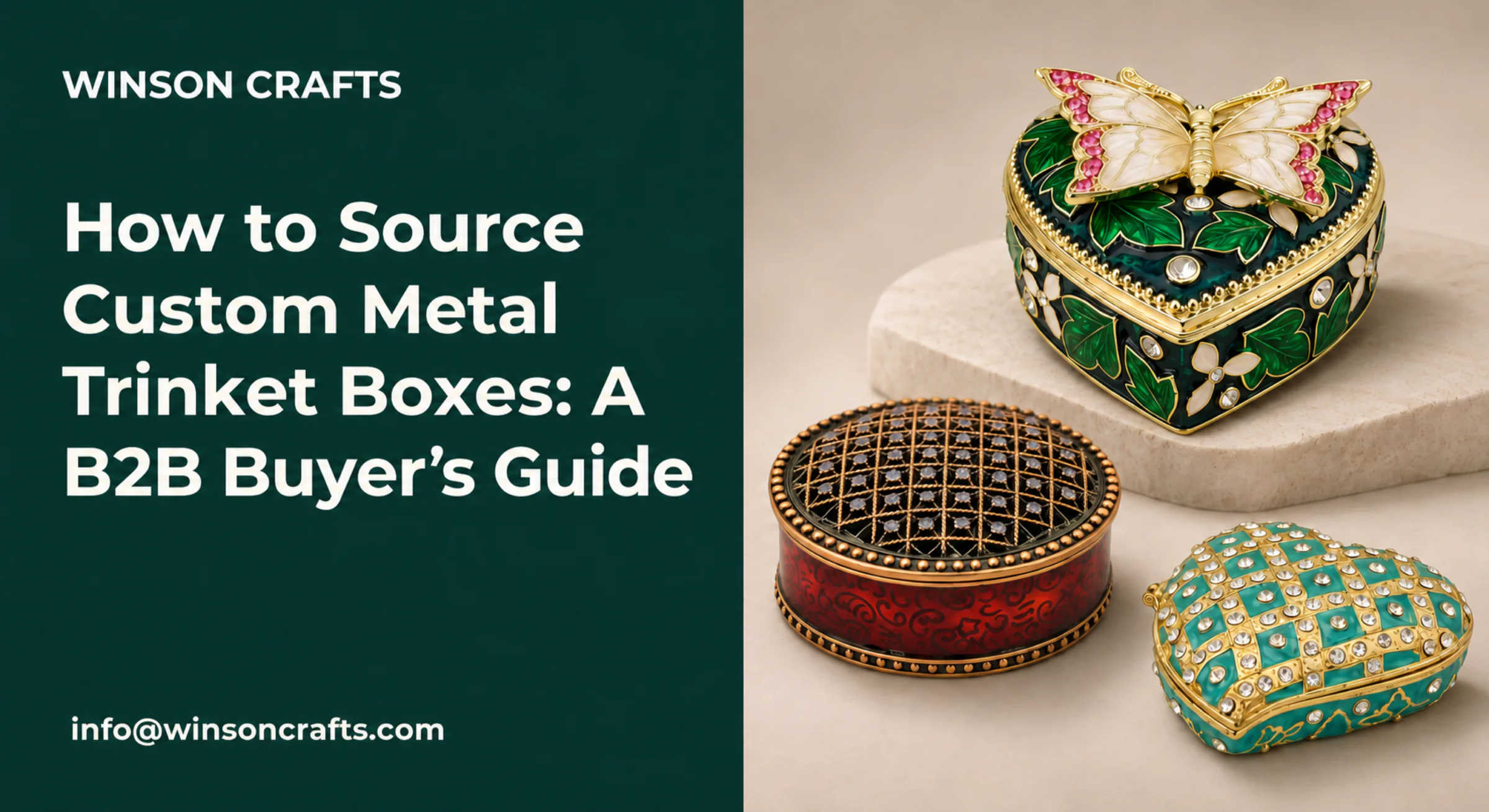
A spec sheet tells you the size, the metal and the MOQ. It won't tell you how the painting looks up close, or whether the lid closes cleanly once the box is put together.
Those two things decide whether a trinket box gets picked up and bought as a gift, or sits on the shelf. Both can only be judged on a real sample.
This guide follows a custom trinket box project from the first brief to bulk production. Along the way, it shows where to check painting and assembly, and what to look for when you do.
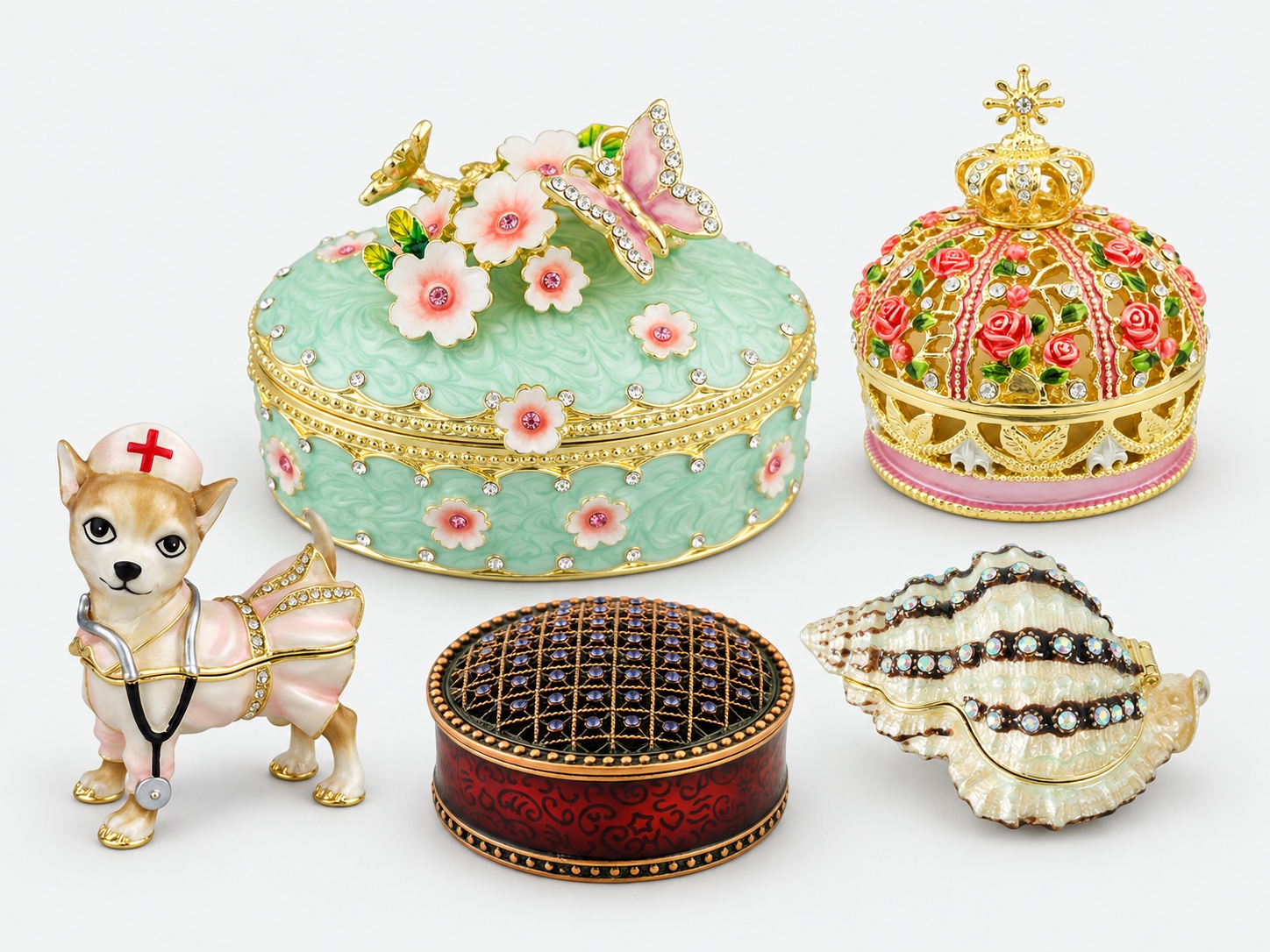
Decide How Much You Need to Customize
Before you contact any factory, decide how far you want to move from an existing product. That choice shapes your MOQ, your timeline and your budget.
Start from an existing design
Most trinket box factories keep a catalog. Ours has more than 3,000 existing designs across our metal trinket box range, from animal trinket boxes to Christmas trinket boxes.
You can keep the shape and change the colors, the logo and the packaging. Check the MOQ and lead time for a color change with each supplier, and ask whether they can show you the new colors before making a sample.
As a reference, a color change with us follows our standard MOQ of around 200 pieces, and bulk production takes the same time as any other order. We send an AI rendering of the new colors first, so you approve the look before a sample is made.
Modify an existing design
Here the factory starts from a shape that already works and changes the parts you choose, such as the pose of an animal or a motif on the lid.
Ask early whether your change needs a new mold. That answer affects both the quote and the schedule.
Develop a new design
You don't need a finished drawing to start. A hand sketch, an AI-generated image or a reference photo is enough for a first conversation.
Before any mold is made, the factory should check whether the shape, size and colors can be made in metal, and suggest alternatives for any detail that won't work. That's how we start every new design. Then we prepare an AI-assisted rendering, you confirm the final drawing, and we make the mold and the sample.
One of our brand clients started with stock designs to test their market. When those sold, they moved to custom molds. Later they added fragrance containers, decorative tea infuser pendants and music boxes. We have worked together for nearly 10 years.
Brief the Factory With the Right Details
A clear brief gets you a faster and more accurate reply. Send these with your first inquiry:
- Reference images: photos, sketches or AI images
- Approximate size
- Estimated quantity
- The market you sell into
- Target delivery date
- Pantone colors, if you have them
- Your logo and where you want it
Artwork rights
If the box uses your own artwork, characters or logo, confirm you have the right to use them. This comes up most often with museum shops and brands.
We don't produce designs that infringe someone else's rights, so expect us to ask.
Logo placement
On trinket boxes, our clients most often choose one of these logo methods:
- A metal logo plate glued inside the box
- A printed logo label applied to the surface
- A raised logo cast into the box as part of the mold
A cast logo is part of the metal itself, so it has to be decided before the mold is made.
If you're building a private-label giftware line, show the factory the logo effect and position you have in mind. You can also ask them to recommend one. Either way, settle it before sampling.
Functional add-ons
Some trinket boxes do more than hold jewelry. Common add-ons include a music movement, a fragrance container, or a matching necklace packed with the box.
Mention these in your first brief, because they change the structure of the box. See our metal music boxes, trinket box and necklace sets and OEM/ODM custom metal gifts.
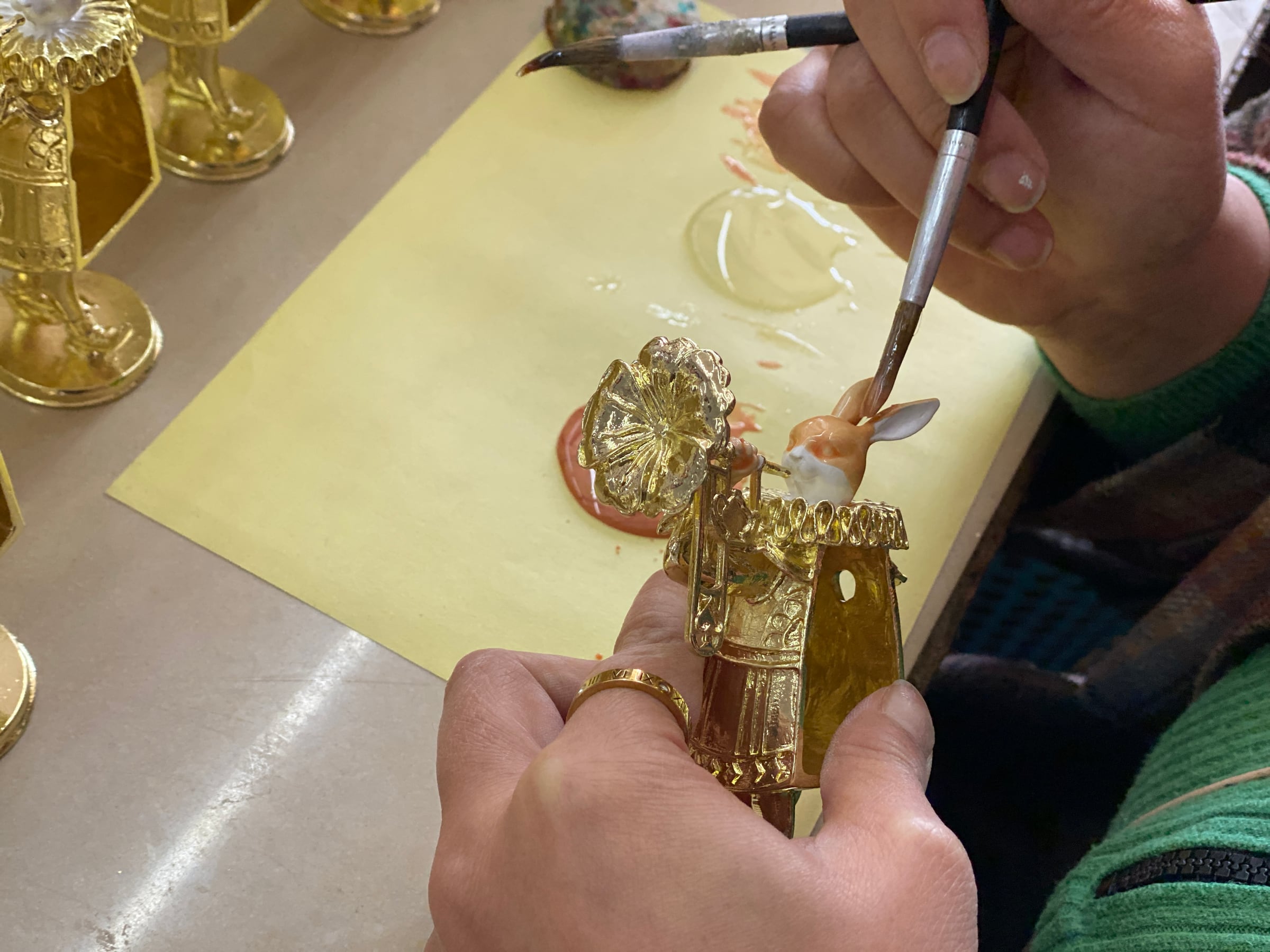
Judge the Hand-Painting Before the Price
Two boxes can have the same shape and a similar price and still look nothing alike side by side. Usually the difference is the painting.
Where hand painting matters, and where it doesn't
On zinc alloy, color is built up in layers.
First, every box is electroplated or spray-painted to cover the raw metal. Plating comes in gold, silver, rose gold, antique bronze, antique copper and gunmetal. Spray paint can be matched to Pantone. Some designs need nothing more.
Color decoration goes on top of that base:
- Hand-painted enamel suits 3D shapes and color gradients. Machine-filled enamel can't reach curved, sculpted surfaces.
- Soft enamel (machine-filled) suits flat, recessed areas in single colors. A machine fills these more evenly than a hand can, and at a lower cost.
- UV printing handles detailed patterns and gradients on flatter surfaces, though the finish looks flatter than paint.
Our senior painters have been doing this work for more than 20 years.
When the sample arrives, judge the painting as a whole, the way your customer will see it. Look at the overall colors, the quality of the painting work, and how the finish looks and feels in your hand.
Combining methods on one box
The best result often uses more than one method.
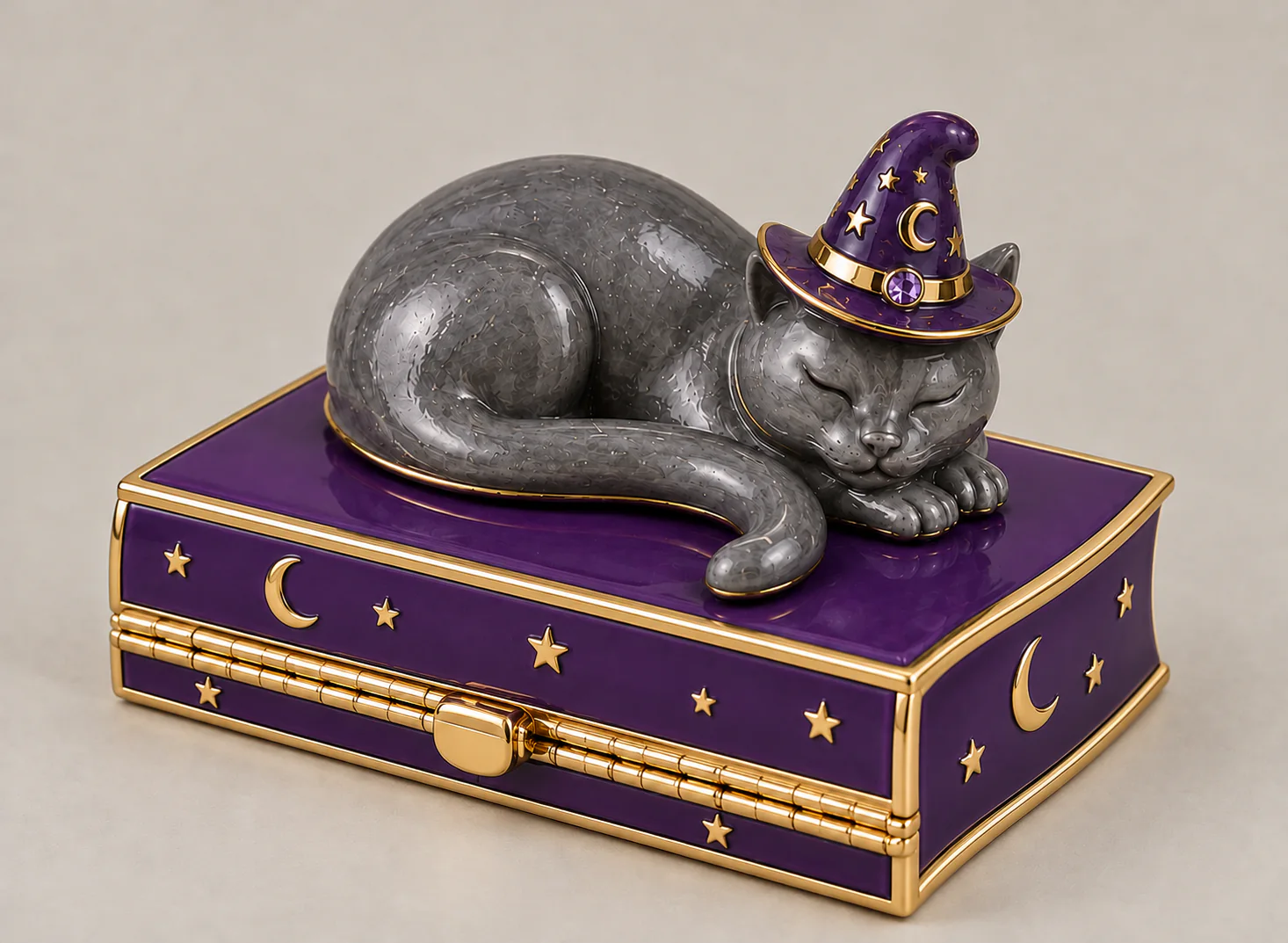
A client asked us for a trinket box shaped like a book with an animal on top. The book had raised relief on a flat surface. Filling it by hand would have flooded the relief and lost the detail, so we used machine enamel there. The animal was hand-painted. The client was very happy with the result.
Normal handmade variation vs. real defects
Slight brush marks and small color shifts from piece to piece are part of hand painting. They are not defects.
Obvious chipping, damage or serious deformation are defects. We don't ship them.
If your market can't accept any handmade variation, hand-painted enamel isn't the right choice. That's worth knowing before you place an order. You can read more about our hand-painted enamel craftsmanship.
Let the Design Decide the Casting Method
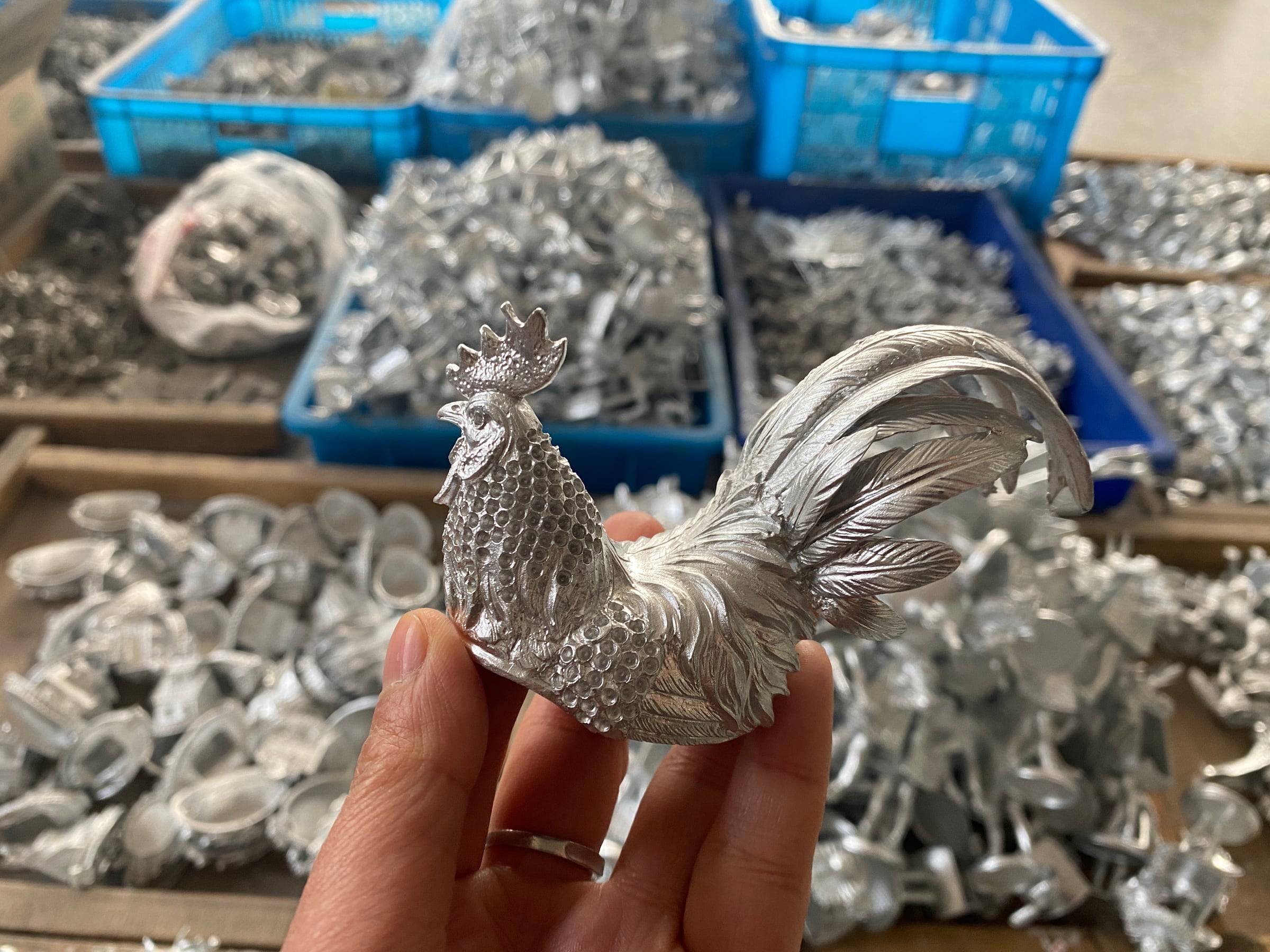
Zinc alloy trinket boxes are usually made in one of two ways.
Die casting uses a steel mold. It suits neat, regular shapes and runs efficiently at larger quantities. The steel mold costs more.
Spin casting (also called centrifugal casting) uses a rubber mold. The rubber flexes, so the part comes out easily even with irregular shapes and complex 3D details. The mold costs less and the MOQ is lower. The surface is not quite as neat as die casting.
Many factories only offer one of the two. We work with both, so the design and quantity decide the method.
When both methods could make the same design and the budget is tight, we usually lean toward spin casting for orders under about 200 pieces. It still depends on how much detail the finished box needs.
The two can also be combined. On a 7,000-piece order of the book and animal box, we die-cast the book for clean lines and spin-cast the animal to keep its 3D shape.
Get a Quote You Can Compare
Quotes are only comparable when they're based on the same specs. Price depends on size and weight, how much of the box is hand-painted, assembly, quantity and packaging.
MOQs vary from factory to factory, and they also depend on the design and the casting method. When you compare quotes, check which quantity each price is based on.
As a reference, our MOQ usually starts at 200 pieces. Trial orders of a few dozen pieces are considered case by case.
The mold fee depends on the design's size, shape complexity and casting method. Ask each supplier whether the mold fee can be refunded or credited later, and on what terms.
We quote the mold fee after reviewing your drawing or reference images. For some products, it may be refunded or credited against future orders when cumulative purchases of one design reach an agreed threshold, typically between 300 and 2,000 pieces. The terms are confirmed in the quotation.
Check that the quotes you compare use the same trade terms, since FOB, EXW and CIF prices cover different costs. We ship FOB Ningbo or Shanghai, EXW or CIF. If you're consolidating goods from other suppliers, we can ship into a shared container.
For a full breakdown of pricing, see how much a custom metal trinket box costs.
Check Whether the Factory Fits Your Project
Communication during development
Ask a specific question and see what comes back. A factory that knows its process gives you a direct answer, or tells you what it needs to check first.
Our founders, a husband-and-wife team, follow each project themselves. We reply to inquiries within 24 hours on working days.
Audit requirements
If your company needs a social compliance audit, ask for it at the start. We are BSCI certified.
Delivery record
Late shipments are a common worry when buying from China. We have made custom metal gifts since 2008, and in 18 years we haven't had a major delivery delay. When a client needs a rush order, we work out what's possible with them.
About 90% of our clients come back with repeat orders.
Review the Sample Like a Finished Product
The sample is your best preview of the bulk order. Open it, close it, and turn it over in your hands, the way your customer will.
Check:
- Hinge: does it feel secure, with no wobble? Is it too tight or too loose?
- Magnetic closure: does the lid snap shut cleanly?
- Gap: is there a visible gap between lid and base when closed?
- Alignment: do the lid and base line up as one design?
- Painting: does enamel spill over the edges? Do the colors match your Pantone references?
- Metal finish: any burrs or rough spots?
- Rhinestones: if the design has them, does each stone sit straight in its setting, and is it secure?
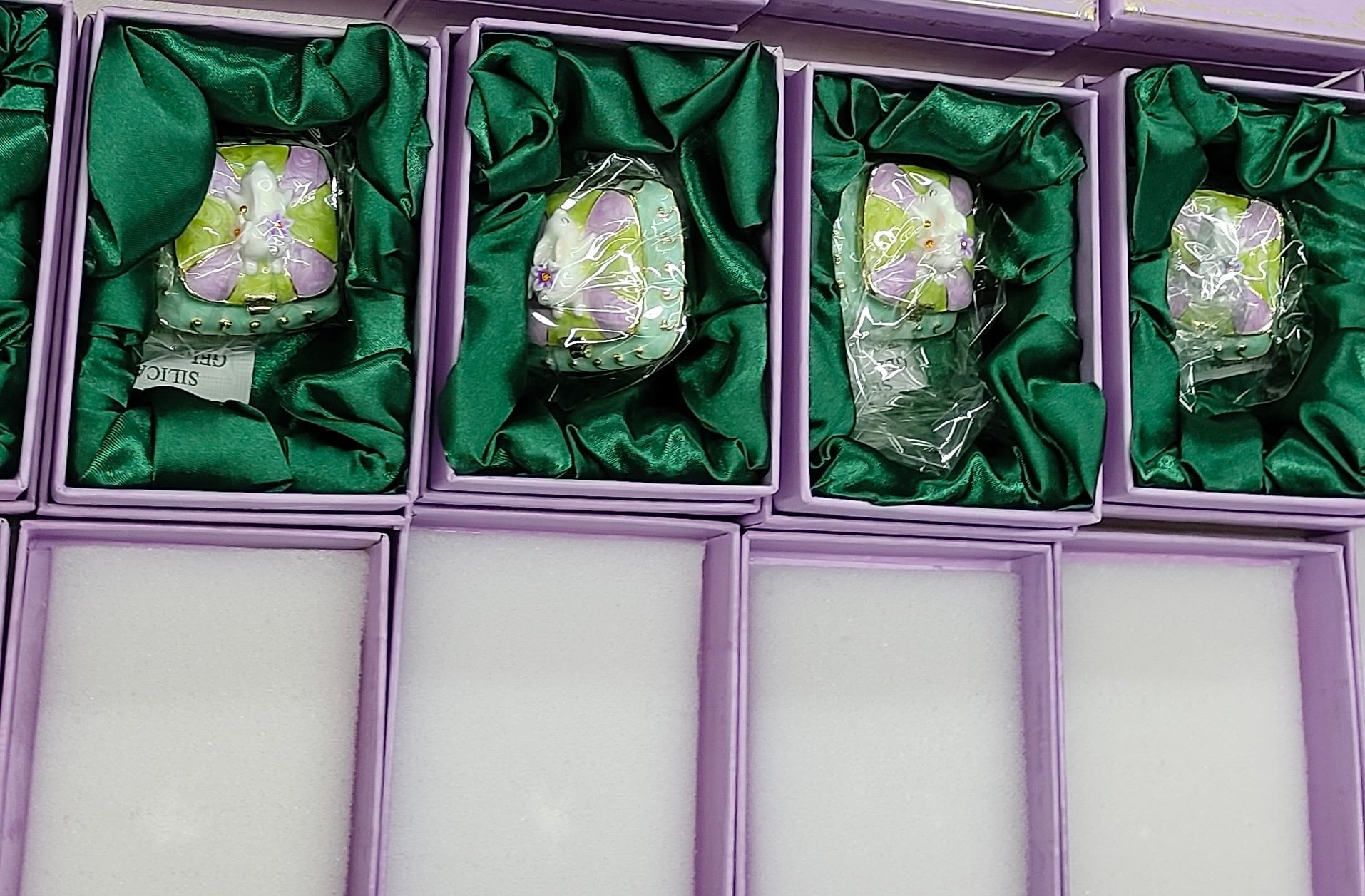
- Packaging: does the box sit well in its gift box or pouch?
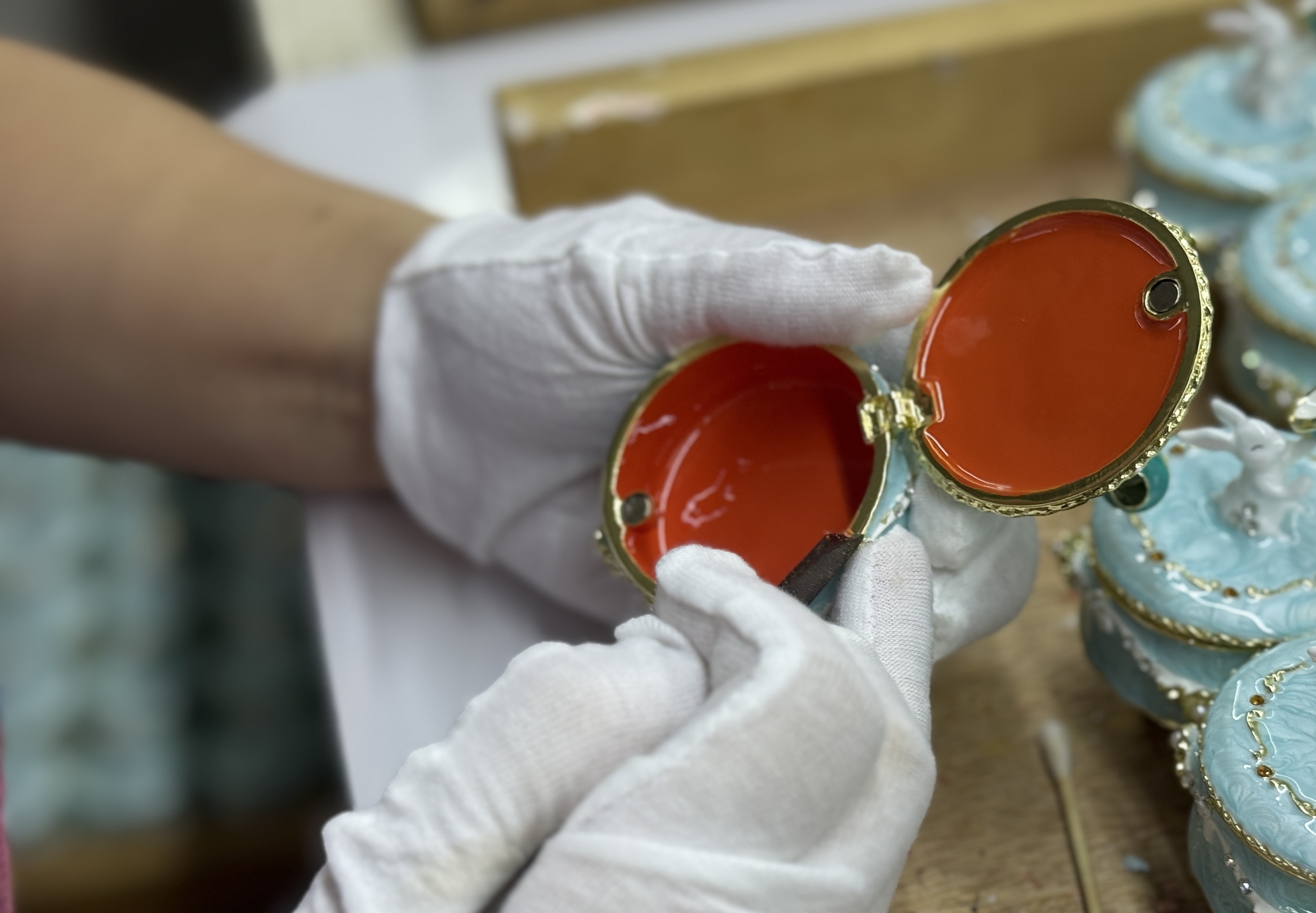
A first sample may show some issues, such as parts that don't fit together properly, slight color differences, burrs on the metal, or a shape that doesn't quite match what you pictured. Any of these should be fixed before bulk production.
Once you approve the sample, ask the factory to seal it and keep it as the standard for bulk production. We do this for every approved sample.
Plan Bulk Production Around the Season
Sampling and bulk production both take time, and the timing differs from one factory to another. It depends on the design, the quantity and how busy the production schedule is. Ask each supplier for their sampling and production times when you request a quote, then work back from the date you need the goods, leaving time for shipping.
As a reference, our samples take 7 to 20 days, depending on complexity. Once we receive the deposit and your sample approval, bulk production takes 15 to 35 days, depending on quantity and complexity.
November and December are peak months. Factories are filling orders before Chinese New Year in January or February, and the holiday shutdown is long. If you're ordering Christmas trinket boxes, plan well ahead.
Ask how the factory checks quality during production. In our factory, checks run between every production stage, with a final inspection before packing.
Treat your first order as a test of the partnership. Check that bulk goods match the sample, and see how the factory communicates and handles any after-sales questions.
Browse more: Sourcing Guides articles