How Much Does a Custom Metal Trinket Box Cost? | WINSON CRAFTS
2026-10-09
There is no useful per-piece price for a custom metal trinket box until we know what you want to make. A small change in shape, painted detail, or order quantity can change the production plan. Here is how we work through the cost with a buyer. This guide breaks down the five cost components that decide your quote — unit production, tooling, sampling, packaging, and shipping — and explains what changes the number so you can budget accurately.
Custom Metal Trinket Box Cost at a Glance
Unit production cost, one-time tooling, sampling, packaging, and shipping
A complete budget has several parts. The unit quote covers making and finishing each trinket box; a new design may also need tooling and a sample. Packaging and shipping depend on what you choose and where the order needs to go.
Quote-specific pricing: no universal per-piece figure
We can give you a firm quote after reviewing the design, quantity, finish, and packaging. A generic per-piece figure would leave out decisions that matter to both the cost and the finished product.
At-a-glance table: cost component, buyer decision, quotation input
Cost component | Buyer decision | What we need for the quote |
Unit production | Size, shape, material, painted detail, and quantity | Drawing or images, dimensions, finish references, and estimated order volume |
Tooling | New form or adaptation of an existing design | Design files and the parts that need to be made |
Sampling | What must be checked before production | Sample requirements and delivery address |
Packaging | Box, pouch, tag, or insert etc. | Packaging style, artwork, and packing requirements |
Shipping | Delivery arrangement | Destination and preferred trade terms |
The Main Factors Behind a Unit Quote
Dimensions, weight, and material selection
Start with the intended dimensions. Size and weight affect the amount of metal and the work needed to finish each piece. We work with materials including zinc alloy, brass, and stainless steel, and assess the choice against the design.
Three-dimensional shape, metal detail, and assembly complexity
A metal trinket box with an irregular figure or detailed relief needs a different production plan from a regular form. Metal finishing and the number of parts to assemble also belong in the quote. Send views of the closed trinket box and its separate components so we can assess both.
Proportion of hand-painted enamel, color detail and gradients
The amount of hand painting matters as much as the number of colors. A dimensional animal with detailed shading calls for different work from a broad, flat area of color. Our hand-painting team includes craftspeople with more than 20 years of experience, and we review which areas need their work.
Order quantity and production method
Quantity can affect which casting method makes sense. We assess the shape and expected volume together before recommending a method. That decision affects tooling as well as the unit quote.
Logo treatment and packaging specification
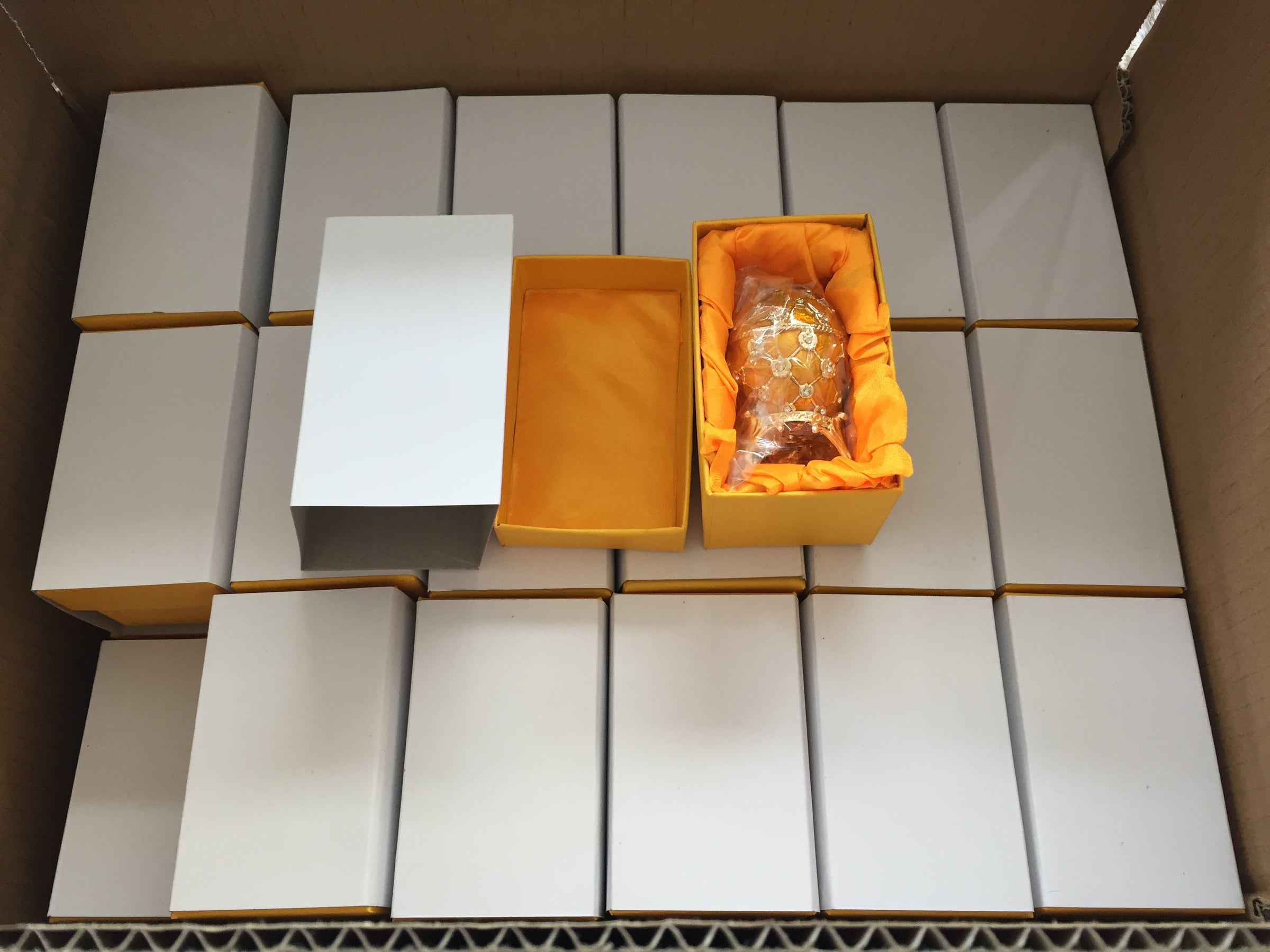
A logo can be screen printed, laser engraved, raised in relief, or added as a metal or crystal label, depending on the design. Gift boxes, velvet boxes, velvet pouches, tags, and instructions are also available. Specify these items early so the quote covers the product you intend to sell.
For design and finish references, see our metal trinket box manufacturer range.
Casting Method and Tooling Cost
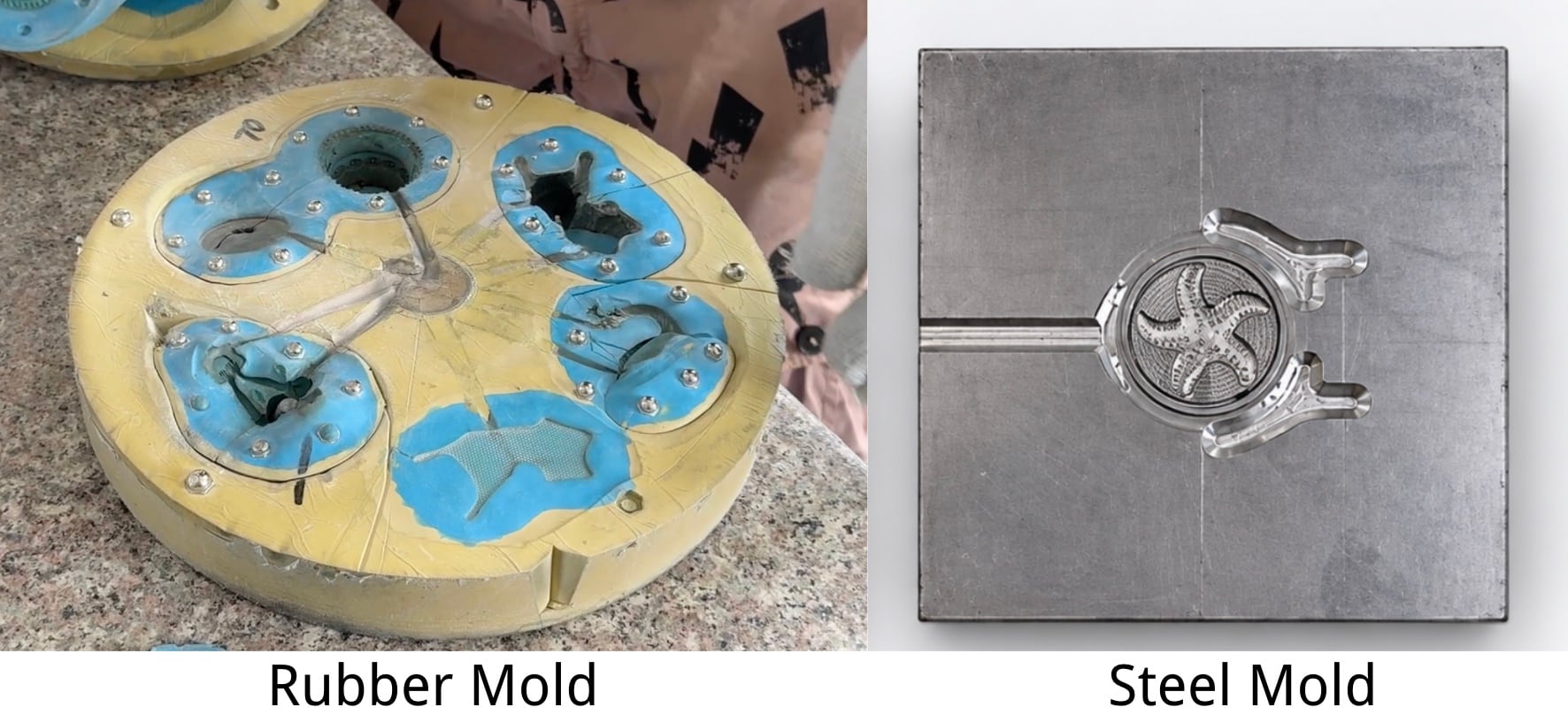
Rubber-mold centrifugal casting: irregular and dimensional forms
For zinc alloy or pewter work, we often consider centrifugal casting when the form is irregular or strongly three-dimensional. The rubber mold has some flexibility, which helps release shapes that would be difficult to remove from a rigid mold. This method also suits projects with lower order quantities.
Steel-mold die casting: regular forms and suitable larger orders
Steel-mold die casting is suited to more regular shapes. Its tooling cost is higher, while production can be more efficient at suitable larger volumes. The right choice still depends on the design and order size.
Hybrid construction: casting method by component
One metal trinket box does not have to use one casting method throughout. We can assess each component by its shape, detail, and quantity, then plan how the finished parts will fit together.
Animal on a Book trinket box Case: a combination of die-cast and centrifugal-cast for a 7,000-piece order
For a 7,000-piece book-and-animal trinket box order, we used die casting for the regular book base and rubber-mold centrifugal casting for the dimensional animal section. The two parts called for different approaches. Choosing the method by component let us address the shape and production volume together.
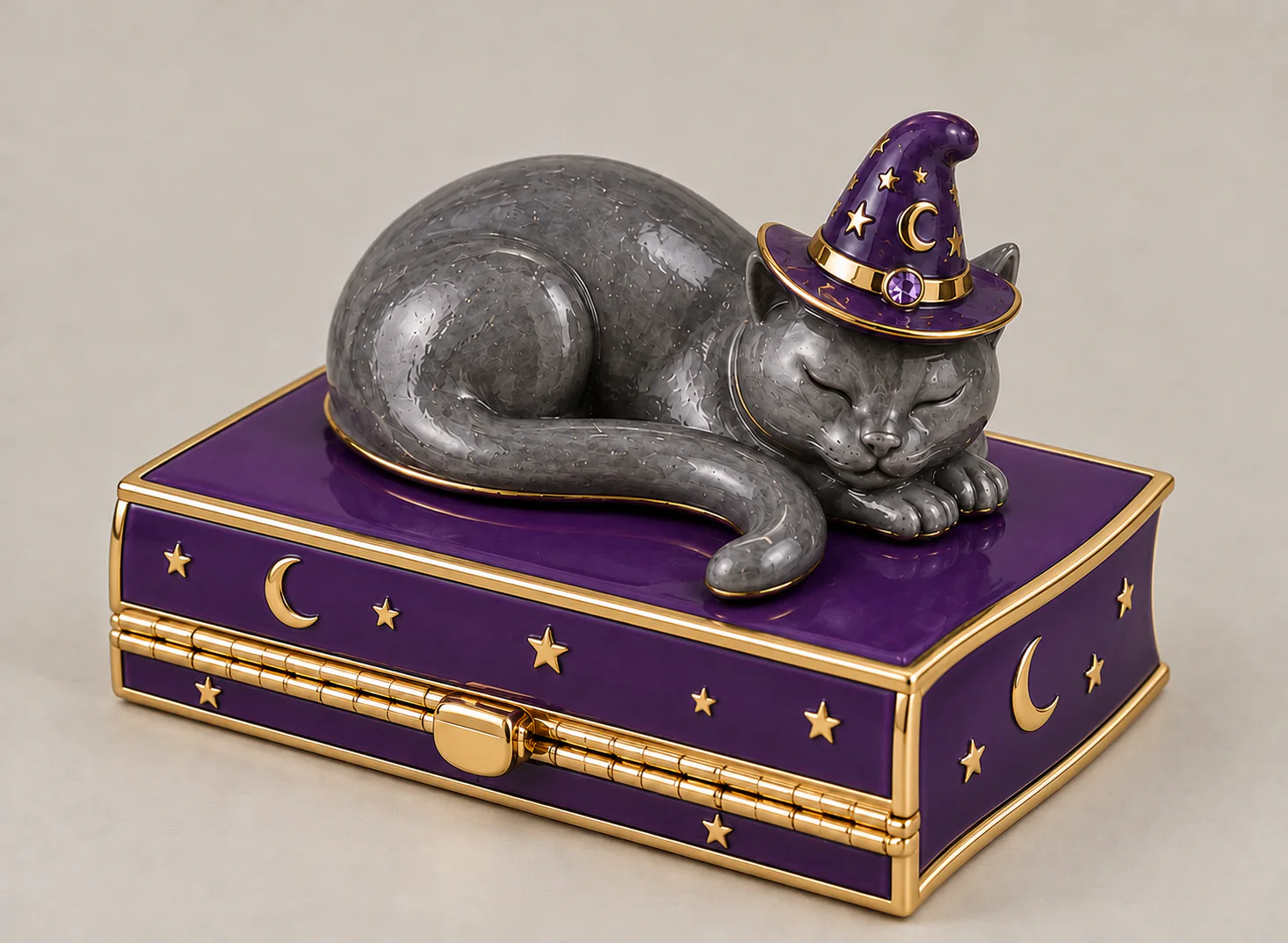
Lower-volume alternative from the same example: overall rubber-mold approach for a proposed 300-piece order with limited tooling budget
If that design were proposed at 300 pieces with a limited tooling budget, we would recommend assessing an overall rubber-mold approach. It is a different production decision for a different order size. We would confirm the result through sampling before quoting it as an approved specification.
Hand-Painted Enamel and Finish Selection
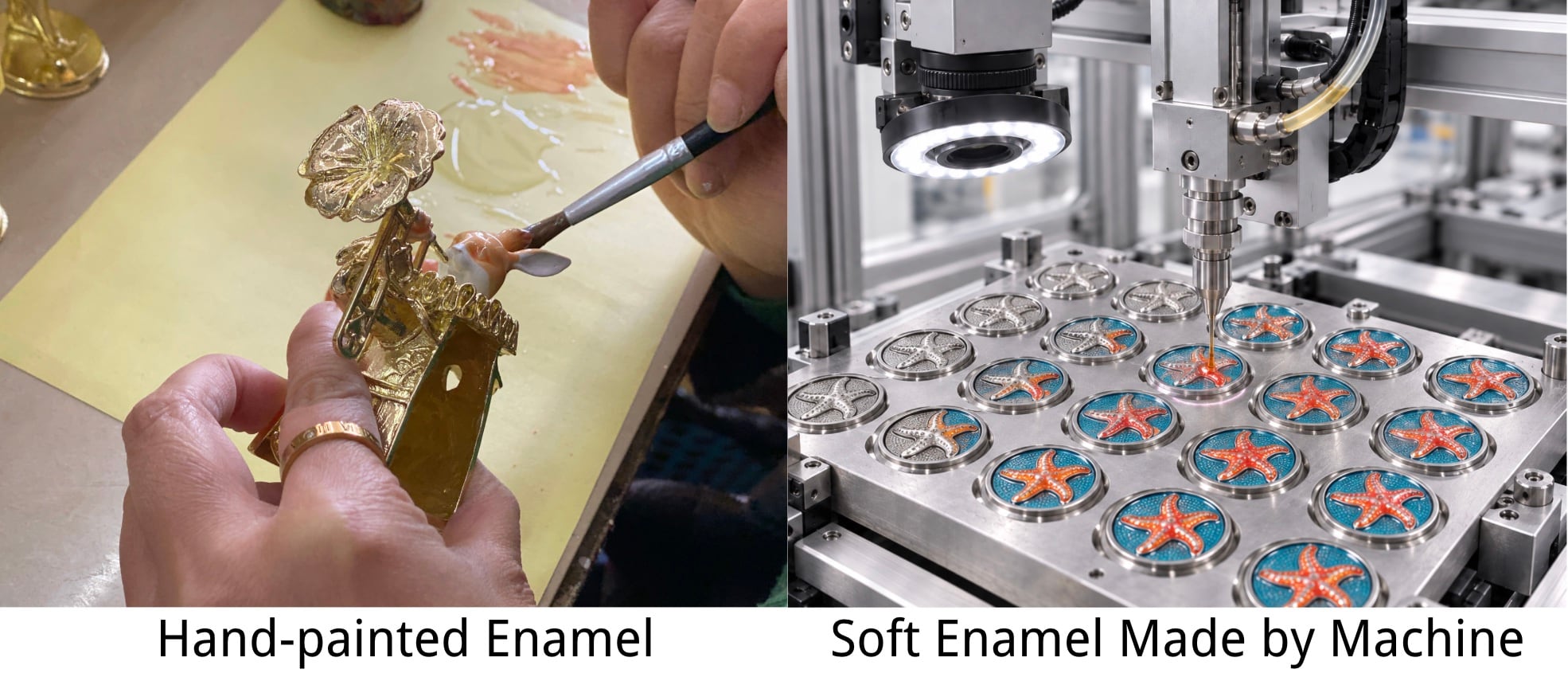
Hand painting for dimensional forms, gradients, and detailed color work
Hand-painted enamel gives us control over color on dimensional forms, including detailed areas and gradients. It is particularly useful when the painted surface needs to follow the shape rather than sit in a flat recess. Know more about hand-painted enamel craftsmanship.
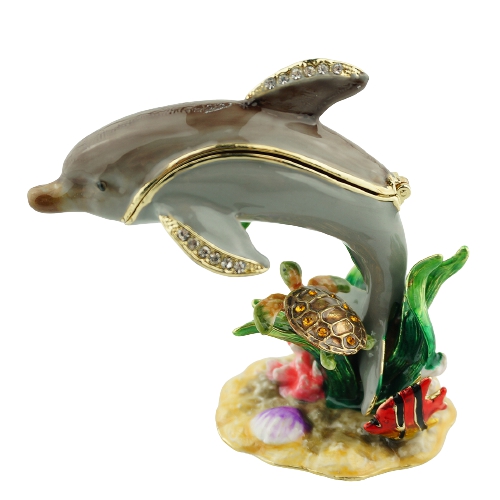
Machine-applied enamel (soft enamel or hard enamel) for suitable flatter, recessed areas
Machine-applied enamel works well in suitable flat, recessed areas with simpler color placement. In the book-and-animal design, we used it on the book section so the raised design remained visible. The dimensional animal section was hand painted.
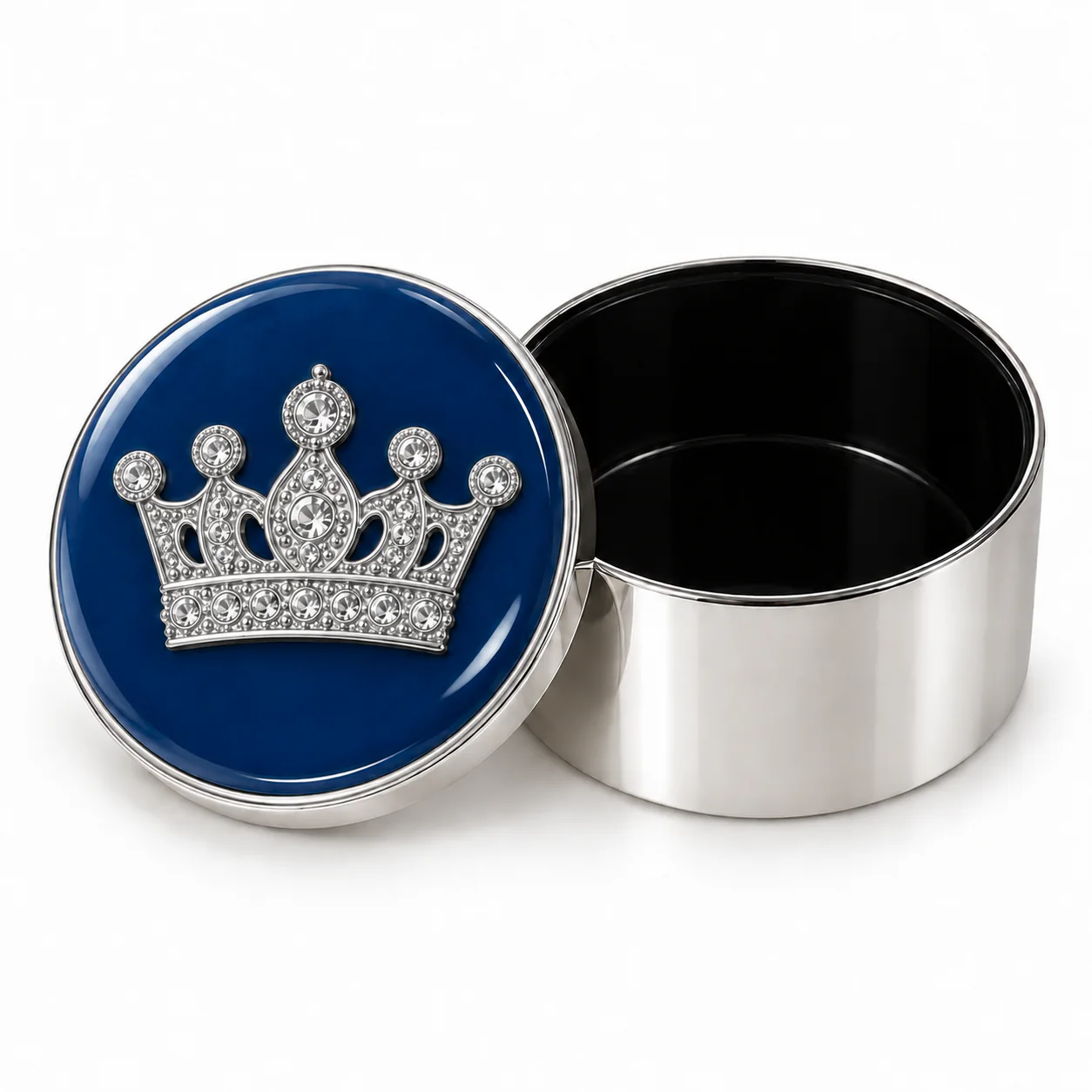
Combined techniques by component, effect and budget alignment
We often review the finish one component at a time. If hand painting adds visible detail to one area while machine-applied enamel serves another, combining the two can meet the intended effect and budget. We will show that choice in the sample.
Sample review for subtle brush marks and minor color differences
Slight brush marks and minor color differences are natural features of hand-painted work. We allow those small variations, but we do not accept flaws that harm the piece’s overall appearance. Review the approved sample with that distinction in mind.
MOQ, Mold Fees, and Sampling Expenses
Typical MOQ of 200–1,000 pieces; product- and process-dependent
Our typical custom metal trinket box MOQ is 200–1,000 pieces. The figure depends on the product and the processes needed to make it. Send your target quantity even if it falls outside that range.
Trial orders of several dozen pieces; case-by-case assessment
We may accept a trial order of several dozen pieces. We assess it case by case, based on the design and production plan. A small trial order is worth discussing, but it is not a standard MOQ for every new design.
Mold Fee Structure and Refund Conditions
The mold fee depends on the design's size, shape complexity, and casting method. WINSON quotes the tooling fee after reviewing your drawing or reference images. For some products, the mold fee may be refunded or credited against future orders when cumulative purchases of one design reach an agreed threshold — typically between 300 and 2,000 pieces, depending on the product. The applicable terms are confirmed in the quotation.
Sample fee and shipping usually paid by the buyer; possible sample-fee refund after a bulk order, subject to agreement
The buyer usually pays the sample fee and sample shipping. In some cases, we can refund the sample fee after a bulk order. Whether a fee applies and whether it is refundable should be agreed during the quotation stage.
Quote Comparisons Beyond the Unit Price
Approved sample and production specifications
When comparing quotes, check what each supplier has included. The approved sample, material, finish, logo, packaging, and quantity should match the production specification. Otherwise, the unit prices may describe different products.
Inspection between production stages; final inspection before packing
We inspect work before it moves from one production stage to the next. Finished pieces receive another inspection before packing. These checks help us compare production with the approved sample.
Visible paint loss, damage, and severe deformation as unacceptable defects
Visible paint loss, damage, and severe deformation are unacceptable. These are separate from the slight brush marks and minor color differences expected in hand-painted work.
Sample timeline of 7–20 days; bulk timeline of 15–35 days after deposit and sample approval, subject to project details
Sampling typically takes 7–20 days, depending on complexity. Bulk production typically takes 15–35 days after we receive the deposit and the sample is approved; quantity and production details affect the final schedule. Confirm your required delivery date before approving the order.
Information Needed for an Accurate Quote
Design drawing, reference images, or AI-generated concept
Send a drawing, reference images, or an AI-generated concept. We will review what the proposed shape and finish require, then discuss any details that need adjustment before sampling. Please use references you have the right to develop.
Intended dimensions, estimated quantity, and preferred material
Tell us the intended dimensions and estimated order quantity. Add your preferred material if you have one. We can then assess the production method against the design.
Pantone references, finish expectations, and hand-painted areas
Pantone references help us understand your color target. Mark the areas you expect to be hand painted, and show any gradients or fine details that matter to the design. The sample is where we review the finished effect together.
Logo method, packaging requirements, and delivery target
Show us where the logo should appear and which method you prefer. Include the packaging format and your delivery target, especially if the product is for a seasonal launch. Those choices belong in the first quote.
Sampling needs and preferred trade terms
Tell us what the sample must demonstrate and where it should be sent. We can also discuss We trade terms such as FOB Ningbo or Shanghai, EXW, or CIF. Send the details for a project-specific quote: custom metal gifts quote.
Working from an Early-Stage Idea
Many B2B buyers contact a factory before they have a complete specification. This is normal, and it is workable. If you only have an AI-generated concept, a competitor's sample photo, or a rough sketch, we can still move the project forward.
Here is how we typically handle an early-stage inquiry:
· Step 1 – Feasibility review: at your reference material and assess whether the shape, size, and finish can be produced in zinc alloy, brass, or stainless steel. If a design detail is not feasible, we propose an alternative before any tooling begins.
· Step 2 – Rough cost range: Based on the intended size, complexity, and an estimated quantity, we provide a preliminary cost range. This is not a final quote — it is a planning tool for your budget.
· Step 3 – Refined quotation: Once the design, material, finish, and quantity are confirmed, we issue a firm quotation with tooling, unit cost, and lead time.
You do not need a finished drawing to start the conversation. You need a clear enough idea for us to assess feasibility and give you a realistic cost range.
Browse more: Cost & Craftsmanship articles