How to Source Custom Zinc Alloy Picture Frames: A B2B Buyer’s Guide
2026-10-13
When sourcing the zinc alloy picture frames, start with the frame designs you want and a rough quantity. A good factory will work out how to make it, talk through the details with you, and give you a cost estimate.
From the first conversation to the first order, every step shows you whether this supplier is the right fit.
Share Your Concept and Expected Order Quantity
Send a drawing, a reference image, or just a rough idea. Tell the factory the size you have in mind, the decorative details, and where the frame will be sold. Mention your estimated quantity and when you need the goods, too.
At Winson, a sketch, an AI-generated image, or a written description is enough to start. We have developed custom frames for museums, brands, and retailers. Before drawing anything for production, we go through what you've sent and ask about anything unclear.
Discuss quantity and MOQ early
Quantity decides which production method makes sense, and whether the factory can take the order at all. So ask about the MOQ while you're still discussing the concept.
Our usual MOQ for custom metal products is 200–1,000 pieces, depending on the design and process. For a trial order of a few dozen pieces, we look at each case individually. Tell us your real target quantity, and we'll tell you what works.
Explain the intended use and artwork requirements
Explain how the frame fits into your product range, gift program, or museum collection. If you supply artwork, characters, or logos, make sure you have the rights to use them. And if the size or other details are still undecided, say so.
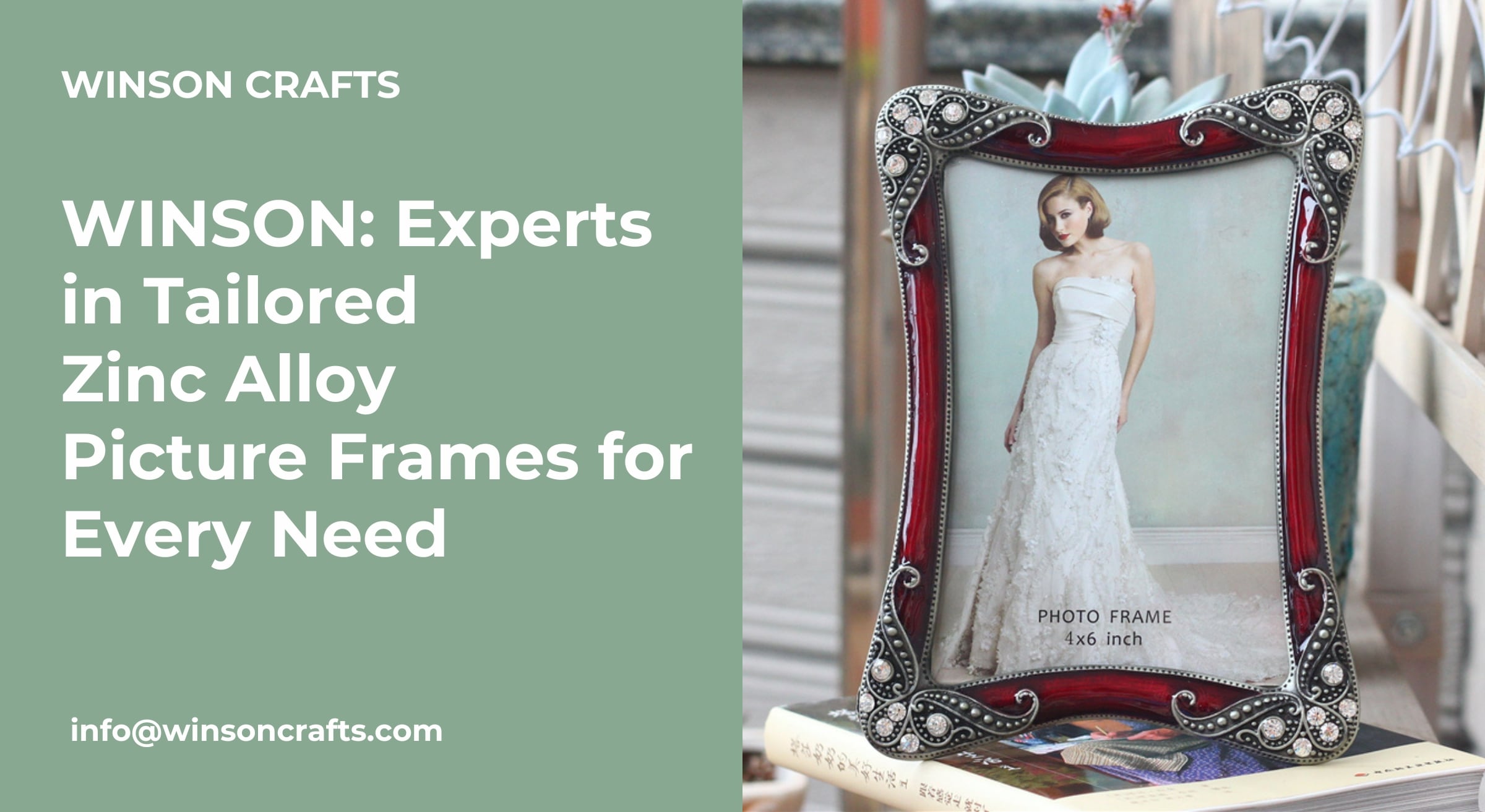
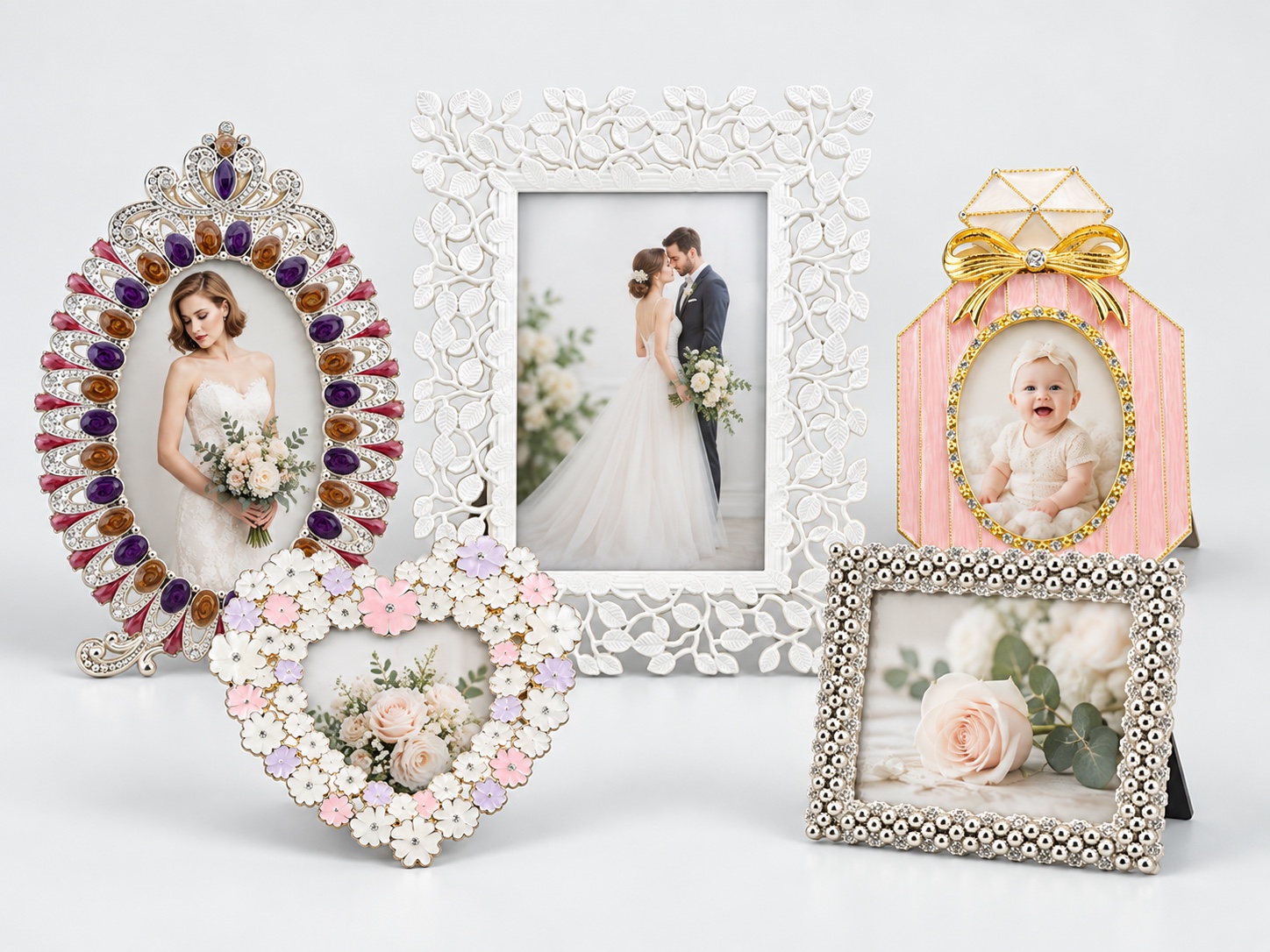
For design references, see our metal picture frame range.
Ask the Factory to Review the Design and Components
A good factory will tell you which parts of your design are easy, which are tricky, and which won't work.
If it says a detail can't be made, ask why. Sometimes the design really needs to change. Sometimes that factory just doesn't have the process, and another one might.
We look at the shape, casting, color, and components as one job, not separately. If a detail needs to change, we explain what we'd change and why before any tooling is made.
Shape and casting method
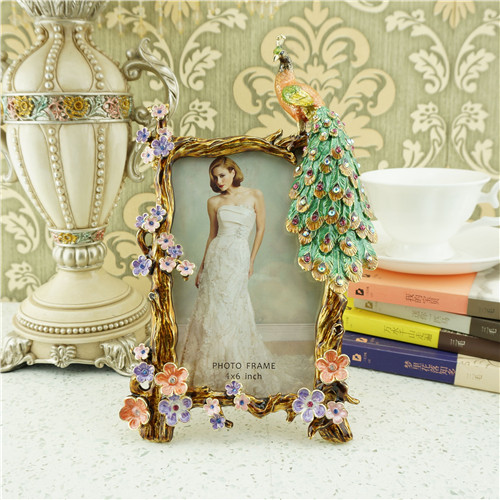
Zinc alloy frames are usually made with one of two casting methods. Rubber-mold centrifugal casting suits irregular shapes and complex 3D details, because the rubber mold flexes a little. Steel-mold die casting suits more regular forms and larger orders.
Many factories can only do one of the two. That matters, because a factory will usually recommend the method it has, not necessarily the one your design needs. Before you accept a recommendation, ask which methods the factory can actually do.
At Winson, we work with both. So we choose the method based on your design and quantity, not on which process happens to be available.
If a design works with either method and your budget is tight, centrifugal casting is usually the better choice for orders under about 200 pieces. That isn't a fixed rule, though. It also depends on how much detail you need in the finished frame.
Ask how the two methods will differ in the finished piece. A centrifugal-cast surface can be less even than a die-cast one, so judge the result from a physical sample.
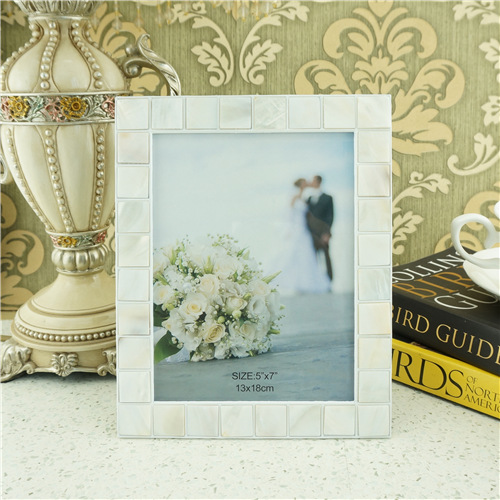
Made by Die-cast
Surface finish and color
Show the factory the look you want and ask how it would achieve it. Zinc alloy is always electroplated or spray-painted first to cover the raw metal color. Enamel or UV printing goes on top only if the design needs it.
Sculpted details and color gradients are painted by hand. Some of our enamel painters have more than 20 years of experience.
Flatter, recessed areas can be filled by machine, and one frame can use both methods. Electroplating, spray painting, and UV printing are handled by our established production partners.
If color matching matters, send Pantone references and mark where each one applies. Our hand-painted enamel craftsmanship page provides finish references.
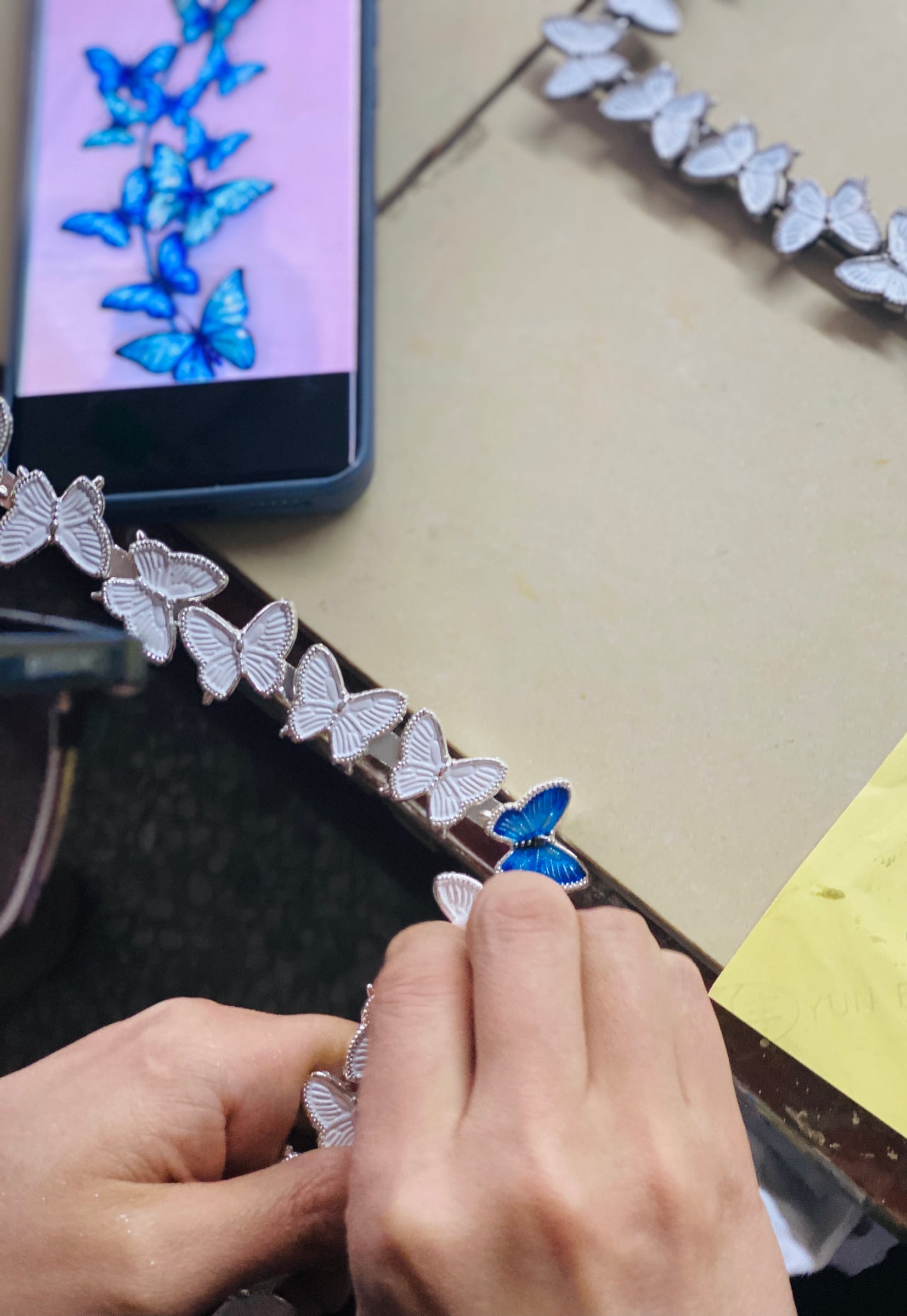
Hand-painted Enamel by WINSON
Crystals and stones
Settle the stone colors, sizes, shapes, and materials before asking for a price. Be specific: standard rhinestones, Czech crystals, a named brand such as Swarovski, or natural stones. Then ask the supplier whether it can get them, and from where.
Unusual stone shapes need extra care. The factory should check with its stone supplier before making the frame mold, because the mold is built around the stones.
Find out whether the stones are in stock or must be made to order. If they must be made, the stone supplier will have its own MOQ. Check it against your quantity.
For example, one of our clients wanted teardrop-shaped crystals in a specific color for a frame. The crystal supplier required a minimum order of 5,000 stones, which was far more than the client wanted. In the end, the client chose a teardrop size the supplier already stocked, in a close color.
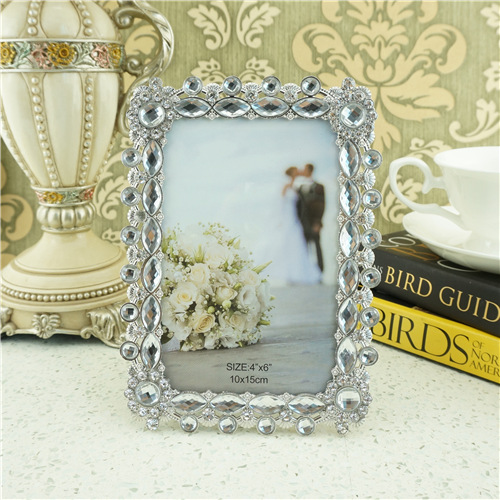
Backboard and stand
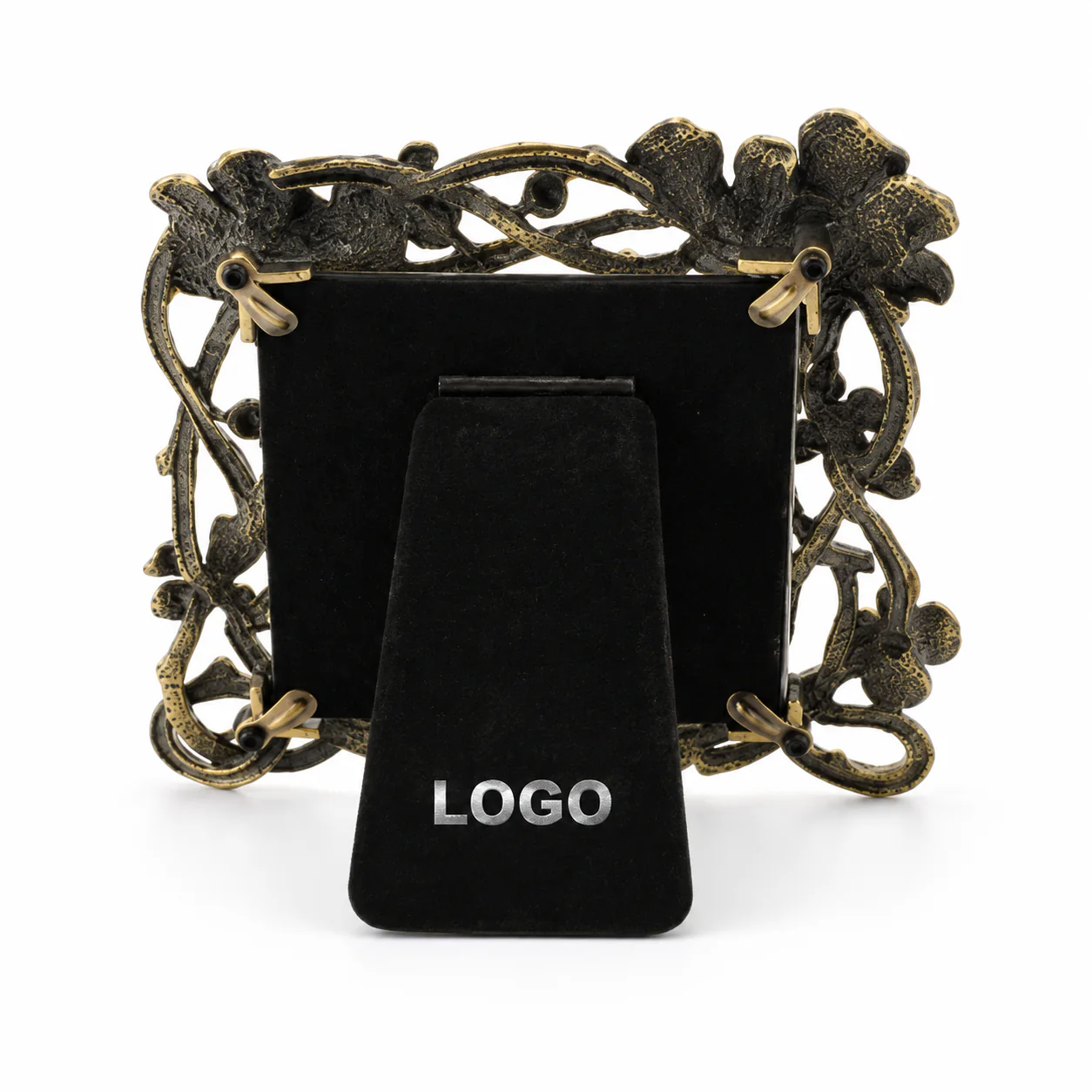
If you need a specific backboard material, say so early. If not, ask for photos and material details of the backboard the factory proposes before you accept it.
Decide whether the frame should stand in portrait only, landscape only, or both, and settle this before sampling.
Printed photo insert and protective cover
Tell the factory what you want printed on the photo insert that comes with the frame. The cover is usually clear glass. If you'd prefer acrylic, ask whether it works for your design, what it does to the price, how clear it is, and how it's protected from scratches.
We have no minimum quantity for custom photo inserts or acrylic covers, though small runs may cost more per piece. Our acrylic covers usually ship with a protective film against scratches.
Logo placement and method
Show the supplier how and where you want the logo to appear, or ask for a recommendation. A raised logo can be cast into the frame as part of the metal. Or a separate metal logo plate can be glued on.
On the backboard or stand, hot stamping is one option, but check that it works on the material you chose. Screen printing, laser engraving, and crystal labels are alternatives. Agree on the method and position before sampling.
Packaging
Tell the factory how you want the frame packed and presented. We offer gift boxes, velvet boxes, velvet pouches, tags, and instruction sheets. Include packaging in the specification before asking for a price, since it affects the cost.
Review the Proposal and Cost Estimate
Once the factory has confirmed the frame can be made and you've settled on a rough quantity, ask for a cost estimate. You can price a single version, or compare options such as different finishes, logo methods, or packaging. Just keep track of what each estimate includes.
Our price depends on the design, size, weight, metal work, assembly, color, quantity, and packaging. We're happy to price alternatives before the specification is final. The formal quotation comes after that, based on the version you choose.
Make sure quotes cover the same product
A quotation rarely lists every process. The details live in the drawings, specs, and your messages with the supplier, but they still drive the price. If you're comparing suppliers, make sure they're all quoting the same frame, or that you know exactly where they differ.
Confirm the commercial terms
Check the quotation against what you agreed. The main points:
| Item | What to confirm |
| Order quantity and unit price | The quantity used for pricing and the agreed product version |
| Tooling | The mold fee and what design it covers |
| Sampling | Any sample fee, sample shipping, and applicable refund terms |
| Packaging | Whether the agreed packaging is included or charged separately |
| Delivery | The destination, trade terms, and shipping charges covered |
| Timing | The proposed sampling and production schedules |
With us, the buyer usually pays the sample fee and sample shipping. The sample fee can sometimes be refunded once you place a bulk order; we agree this case by case. Trade terms can be FOB Ningbo or Shanghai, EXW, or CIF.
If the price fits your budget, move on to checking the supplier and arranging the sample. If you change the design or components later, ask for an updated price.
Check Whether the Supplier Fits Your Project
By now you've already learned a lot about the supplier from the design discussion. Did it understand what you wanted? Did it tell you plainly what couldn't be done?
Before paying for tooling, check two more things: delivery capacity and any audit your company requires.
Professional advice and communication
Look at how the supplier handles specific questions. When it suggests a change, it should explain why, and it should help you close any open details. The way it answers now is a good preview of how sampling will go.
Delivery capacity for your order
Headcount tells you little. Ask for a dated schedule for your order instead. Casting, finishing, assembly, and any outside work all have to fit into it, so check whether it works for your launch.
For reference, our bulk production usually takes 15–35 days after the deposit is received and the sample is approved.
For a very large order, it's worth visiting the factory to see the equipment, the staff, and how production is run. The bigger the order, the more checking it deserves.
Factory audits and buyer requirements
If your company or retail customer requires a factory audit, raise it early and ask what documents the supplier can provide. Winson Crafts has BSCI certification, available on request.
Make and Approve the Sample
Start sampling once the design, tooling fee, price, and sample schedule are agreed. Settle the shape as much as you can at the drawing stage. Changing a mold afterwards can be expensive.
We use AI-assisted renderings and 3D drawings to help you see the finished look before you approve the final artwork. Then we make the mold and the physical sample. Sampling usually takes 7–20 days, depending on complexity.
Confirm the final design before tooling
Go over the size, shape, components, finish, and logo one last time. Any unusual stones should already be confirmed with the stone supplier. Make sure everyone is working from the same artwork version for the mold.
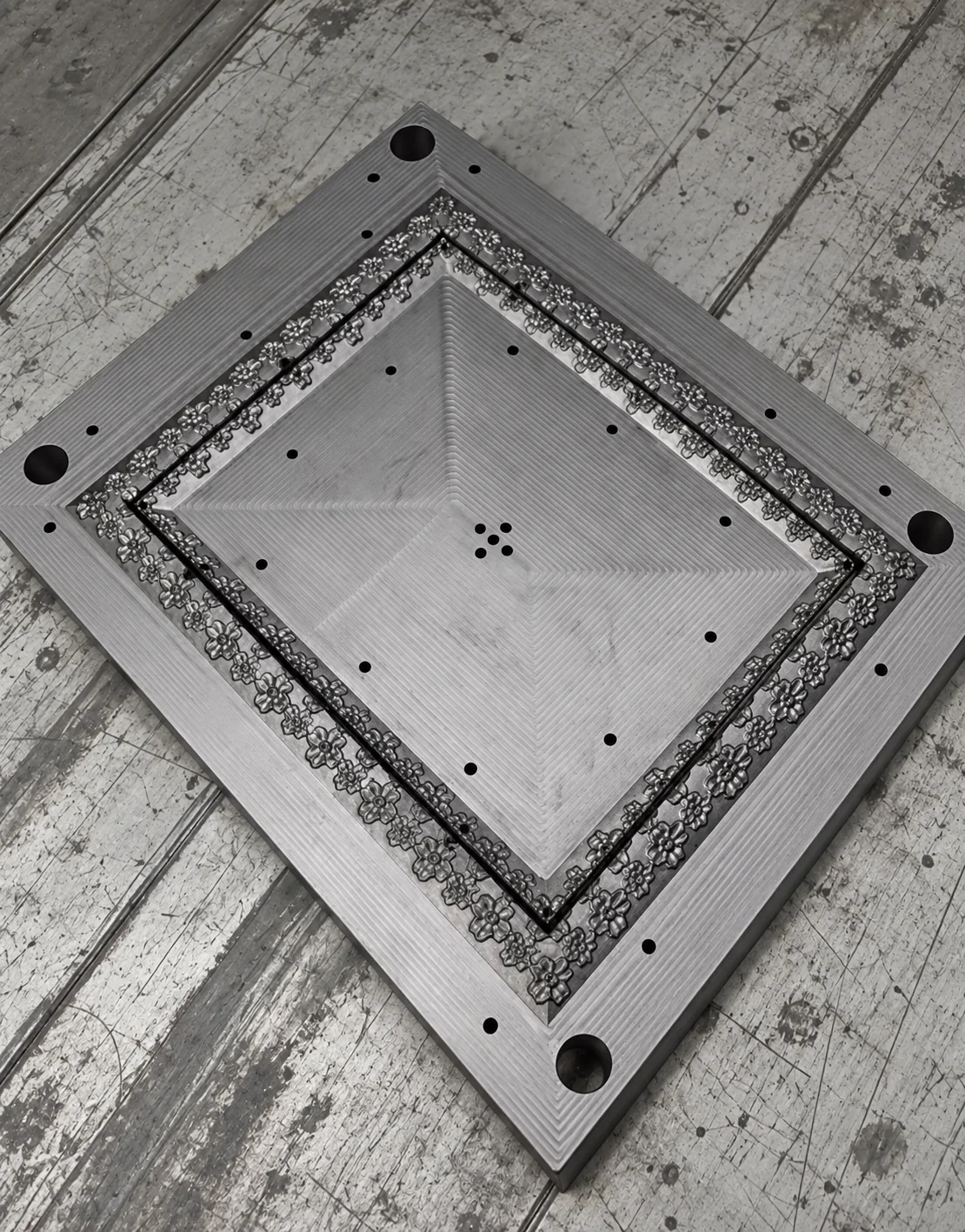
Die-casting molds for zinc alloy picture frame
Watch how the factory handles sample changes
A new design often shows a few problems only once it's a real object. On first samples, the issues we see most are parts that don't fit together properly, color differences, rough metal finishing such as burrs, and a shape that doesn't quite match what the client pictured.
When that happens, ask the factory what it would change, how, and whether the change affects cost or timing.
If the sample isn't good enough, find out whether it can be brought up to the agreed standard. If the factory can't get there, look for another supplier before placing the bulk order.
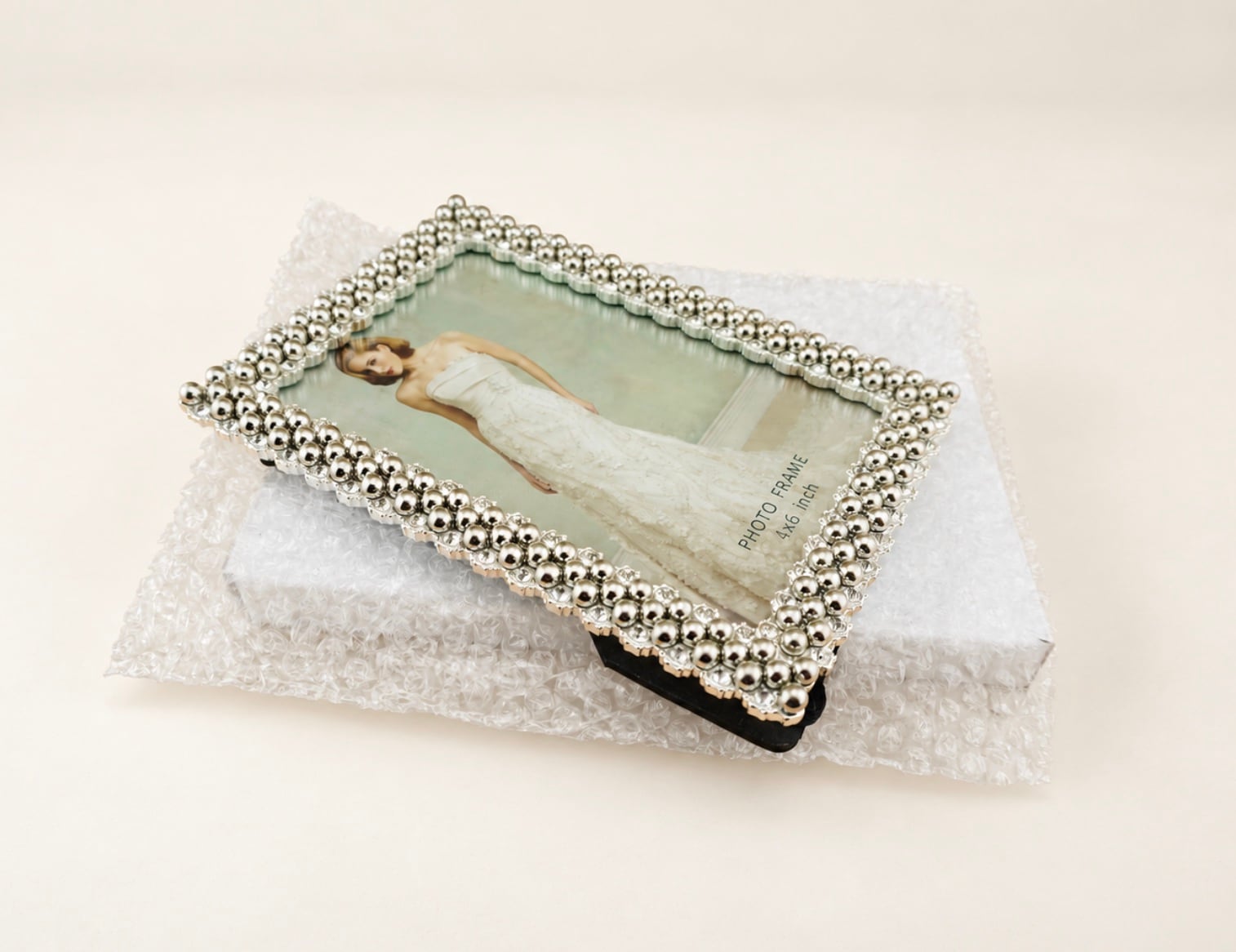
Review the complete frame and packaging
Check the metal detail, surface, colors, and logo. Then go through the stones, backboard, stand, insert, cover, and packaging against what was agreed. Get any last changes confirmed in writing before you approve the sample for production.
On hand-painted enamel, slight brush marks and small color differences are normal; they come from the handwork. We accept those. We reject anything that spoils the overall look, such as visible paint loss, damage, or serious deformation.
Use the First Order to Test Production and Service
A good sample doesn't guarantee a good bulk order. The first order shows how the supplier really performs, so compare the goods with the approved sample and note how the factory communicated along the way.
Product quality in the bulk order
Check the bulk goods against the approved sample and specifications. If something is off, send clear photos and point out exactly what's different. Then see how the supplier responds and what it offers to do.
Progress and delivery communication
Agree upfront how and how often you'll get progress updates. If something threatens the schedule, a good supplier tells you right away, gives you a new date, and explains what it can do about it.
After-sales support
Ask how quality problems will be handled after delivery. Then see whether the supplier actually does what it promised. That tells you more than anything else when you plan a repeat order.
Send your frame concept and expected quantity through our custom project contact page and we'll tell you what's possible.
Browse more: Sourcing Guides articles