
Craftsmanship Begins with the Right Process
The most useful question in custom metal gift manufacturing is not “Which process sounds most premium?” It is “Which process gives this particular design the required form, color, fit and repeatability?” A sculpted animal, a regular book-shaped base and a flat logo area may need different methods—even when they belong to the same product.
WINSON develops metal trinket boxes, Fabergé-style eggs, Christmas ornaments and other decorative giftware. This guide explains how we evaluate a design before tooling, where handwork adds value, when controlled production methods are preferable, and how specialist partners fit into a coordinated manufacturing plan. The photographs show real workshop activities; individual images do not imply that every pictured item follows one identical production route.
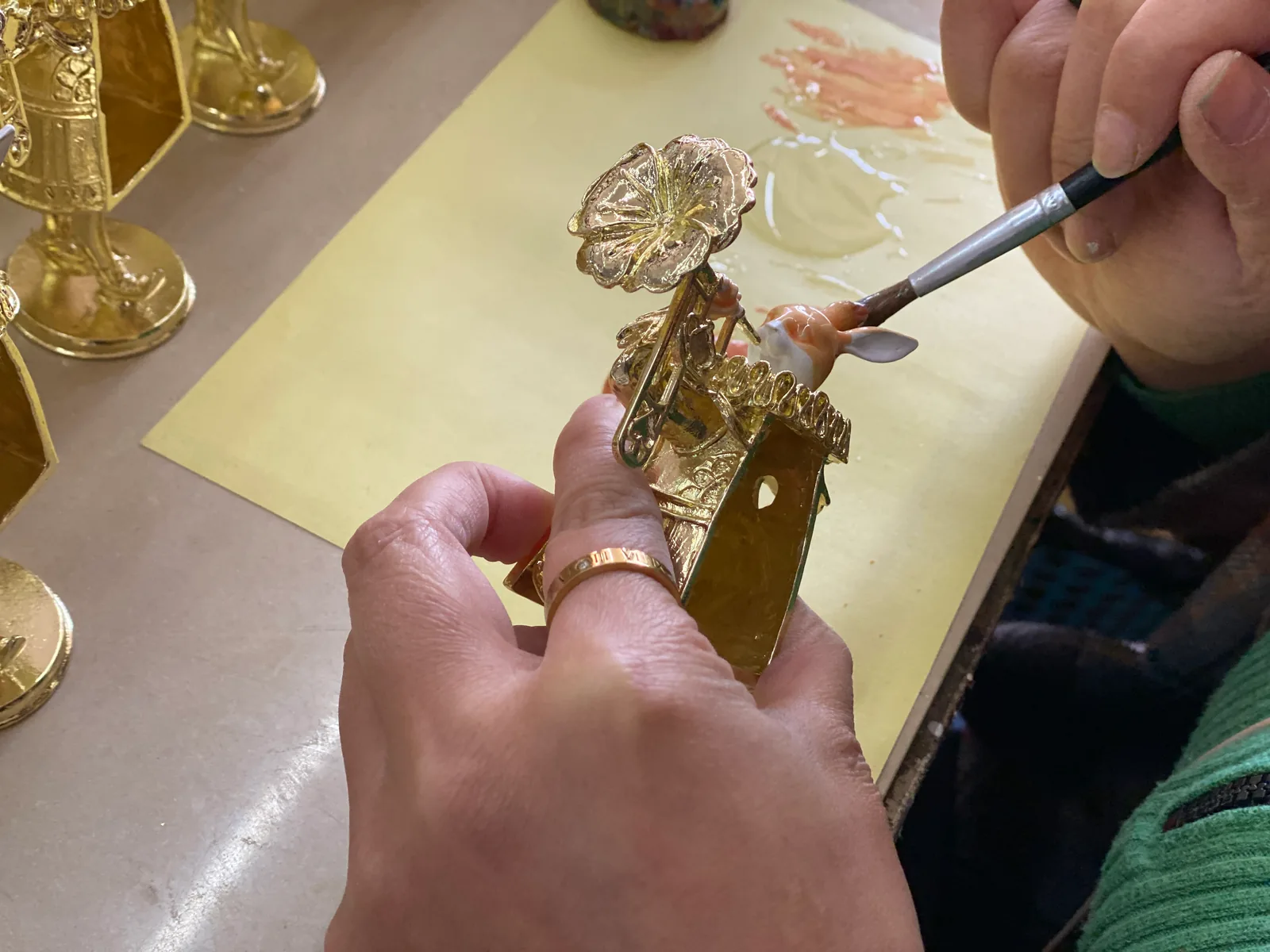

Hand-Painted Enamel for Sculpted Detail
Hand-painted color is particularly useful when a form has dimensional features that cannot be reduced to neat, bounded color cells: animal markings, petals, facial features or subtle changes of tone across a curved surface. A painter can follow the relief and build a more nuanced finish on the approved sample.
That does not make hand painting the right answer for every area. Where a design calls for repeated, single-color fields within defined recesses, controlled soft- or hard-enamel filling may produce a cleaner and more economical result. On a raised relief, the method should be tested so color does not obscure the intended detail. Hand-applied and controlled color can be combined on one item.
For zinc-alloy work, the underlying metal appearance is normally established first through electroplating or spray painting; hand painting, enamel filling or UV printing then adds design-specific color if required. The sequence and visual reference should be confirmed on a sample. Small brush marks or slight color variation can be normal in hand-decorated pieces; obvious paint loss, damage or severe deformation are not acceptable.
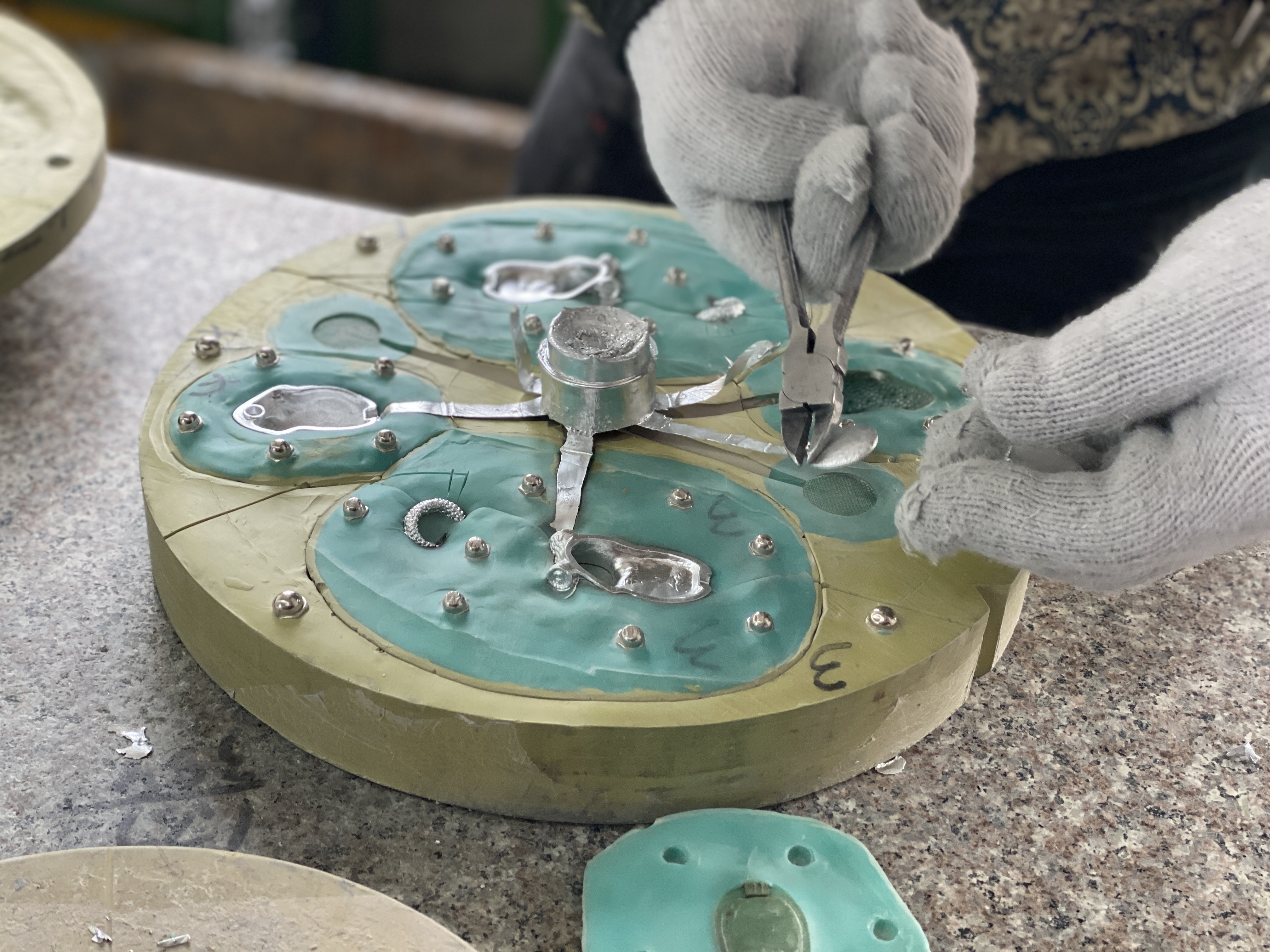
Die Casting or Centrifugal Casting?
Steel-mold die casting is worth evaluating for more regular parts that need repeatable dimensions and a tidy surface at a suitable production volume. The tooling investment is generally higher, so a larger run can make that investment easier to justify.
Rubber-mold centrifugal casting is often more adaptable for sculptural forms, undercuts and detailed three-dimensional components, with a lower initial tooling commitment. It can also be a practical route for a smaller trial. Its surface may need more manual finishing, so the approved sample matters more than a process label alone.
We compare geometry, relief, assembly fit, expected surface, quantity and tooling budget before recommending either route. A die-cast part is not automatically better than a centrifugal casting, and a lower tooling cost does not guarantee a lower finished-piece cost. The decision should be made for each component, not just for the product name.
What the Forming Route Looks Like
These real photographs show different products and production stages, not a single before-and-after sequence.
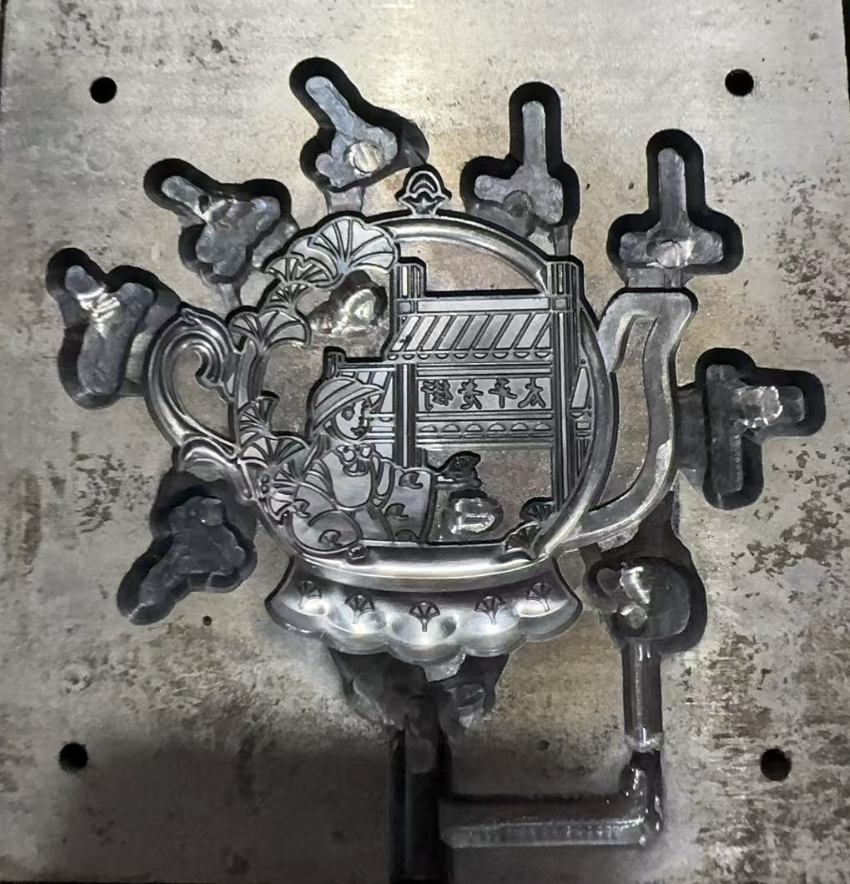
Steel Tooling
A steel die is prepared around the part geometry. The photo shows the tool, not a running die-casting machine.
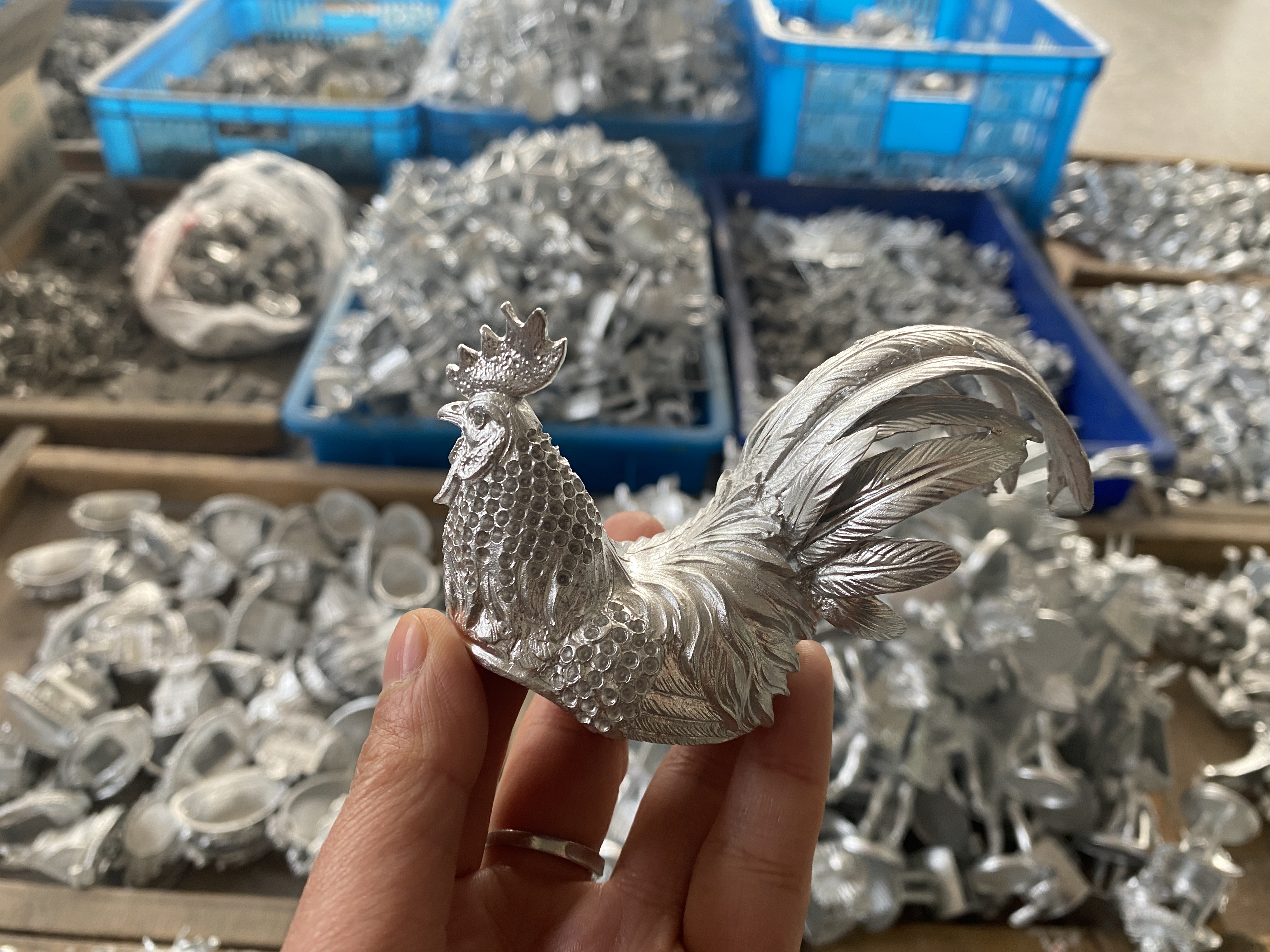
Cast Surface Detail
An unfinished decorative casting reveals relief and areas that must be assessed before coloring.
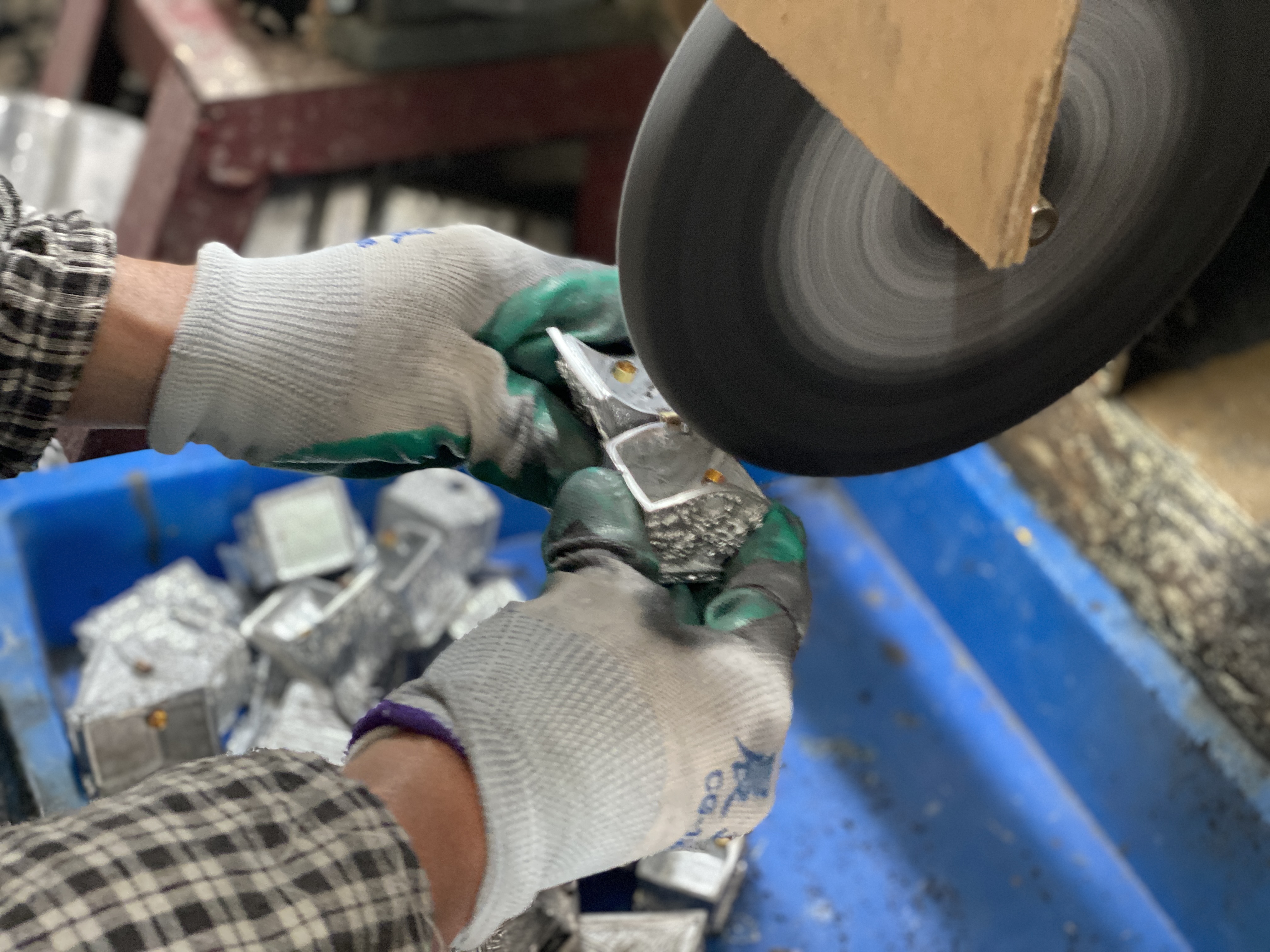
Hand Finishing
Edges and surfaces are worked before the next stage; finishing needs depend on the casting route and design.
One Product Can Need More Than One Process
A 7,000-piece book-and-animal trinket-box project illustrates why the decision is often made part by part. The regular book section was die-cast for its orderly form. The sculptural animal was made using rubber-mold centrifugal casting. Controlled color application protected the book's relief, while the animal retained hand-painted detail. This combination balanced appearance, repeatability and cost for that particular order.
If the brief instead calls for roughly 300 pieces and a limited steel-tooling budget, an all-rubber-mold approach could be evaluated at sampling stage. It is an option to test—not a claim that a small run will match the larger project's cost or finish without adjustment.
Form development also comes before coloring. For one museum-artifact reproduction based on photographs rather than a physical original, a master sculptor with 20 years of experience helped hand-refine the model. That experience belongs to the sculpting work on that project; it is not a claim about the tenure of every enamel painter.
Separate the Base Finish from Decorative Color
For zinc-alloy components, electroplating or spray painting sets the underlying surface appearance. A buyer might specify a metallic tone such as gold, silver, rose gold, antique bronze or gunmetal, or a painted base color. If that surface is the whole design, no additional color treatment may be needed.
Hand painting, soft- or hard-enamel filling, and UV printing serve a different purpose: they add motifs, color fields or fine graphics after the base treatment where the design calls for them. These methods are not interchangeable with the underlying finish. The right sequence, color reference and protection of raised detail should be agreed on the sample.
Specialist Partner Processes We Coordinate
Electroplating
A partner-applied base metal finish. Buyers should confirm the target tone, reference sample and visible surface requirements before decorative color is added.
Spray Painting
A partner-applied base color for suitable components. Specify the target color, coverage and texture; review the coated sample before subsequent decoration.
CNC Machining
Specialist machining for parts whose geometry or fit calls for it. Share drawings, dimensions and mating-part information so feasibility can be assessed.
Stainless-Steel Cutting
Partner-supported cutting for specified stainless-steel components. Material grade, thickness, outline, edge finish and joining method are checked against the design.
These operations are carried out with specialist partner factories rather than represented as equipment in WINSON's own workshop. WINSON coordinates the brief, component handoff, sample approval and checks when processed parts return for subsequent work. UV printing is likewise arranged with a long-standing specialist partner when a design needs that form of decoration. For buyers, the important question is not whether every machine sits under one roof; it is whether the specification and quality expectations remain clear across each handoff.

Quality Checks Between Production Stages
Inspection should not wait until the carton is sealed. WINSON checks work as it moves from one stage to the next and performs a final finished-product inspection before packing. Depending on the design, the review may focus on visible casting defects, surface and color, assembly, movement, fit and presentation.
A Fabergé-style egg, for example, needs attention to overall shape and the gap where its two halves meet. A hinged trinket box needs an opening action and aligned closure that match the approved sample. Hand-decorated work may show minor brush traces or small color variation, but obvious paint loss, damage or severe deformation should be rejected.
Buyers can make this more predictable by approving a physical reference sample and recording the critical appearance, fit and packaging requirements before bulk production. Any formal test method, tolerance or inspection level should be specified for the particular order rather than assumed from a general web page.
Details Worth Reviewing Before Dispatch
Real examples from separate products; exact checkpoints are agreed for each order.
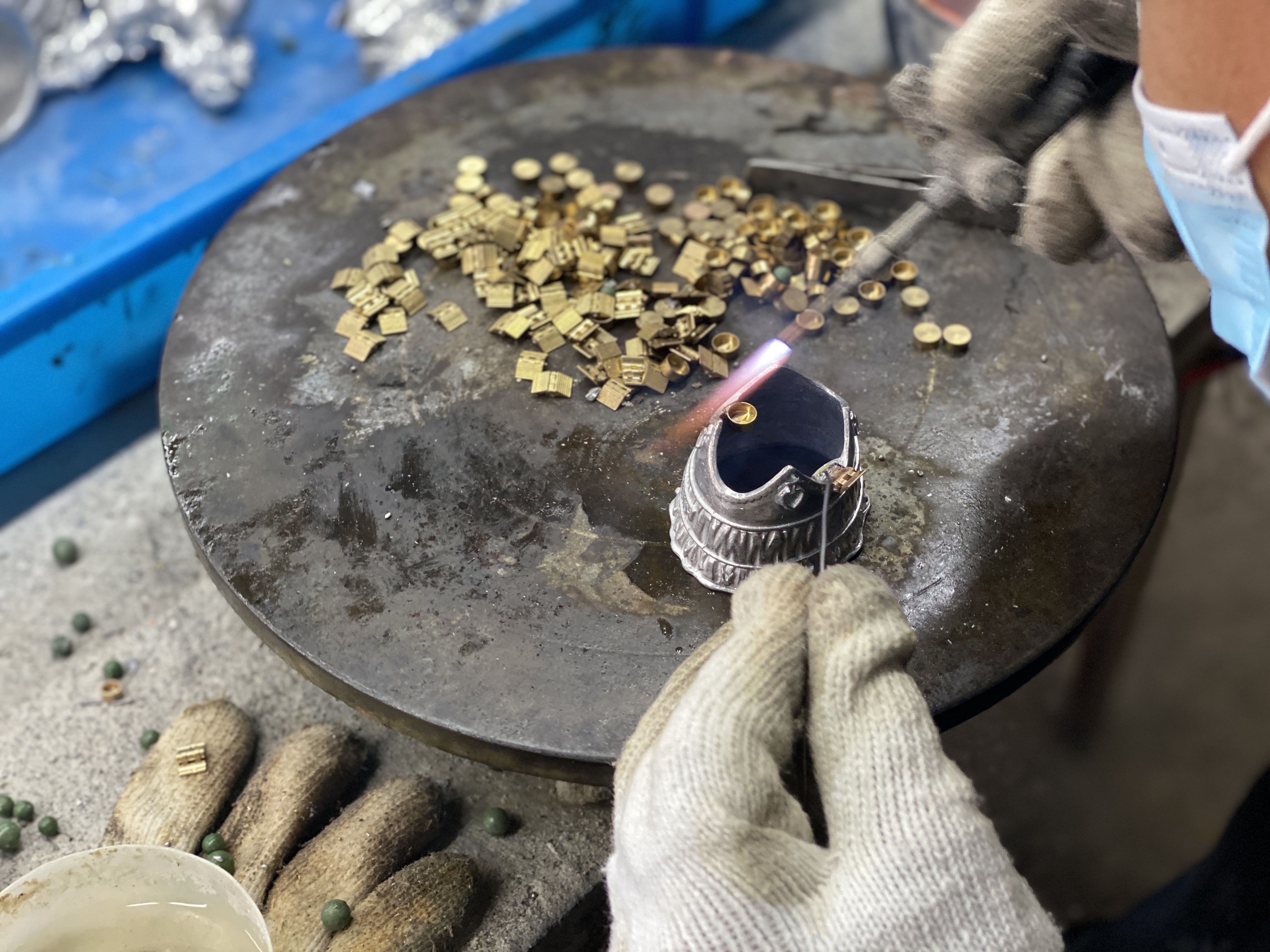
Assembly and Hinge Fit
Joining details should be reviewed for alignment and the intended opening action.
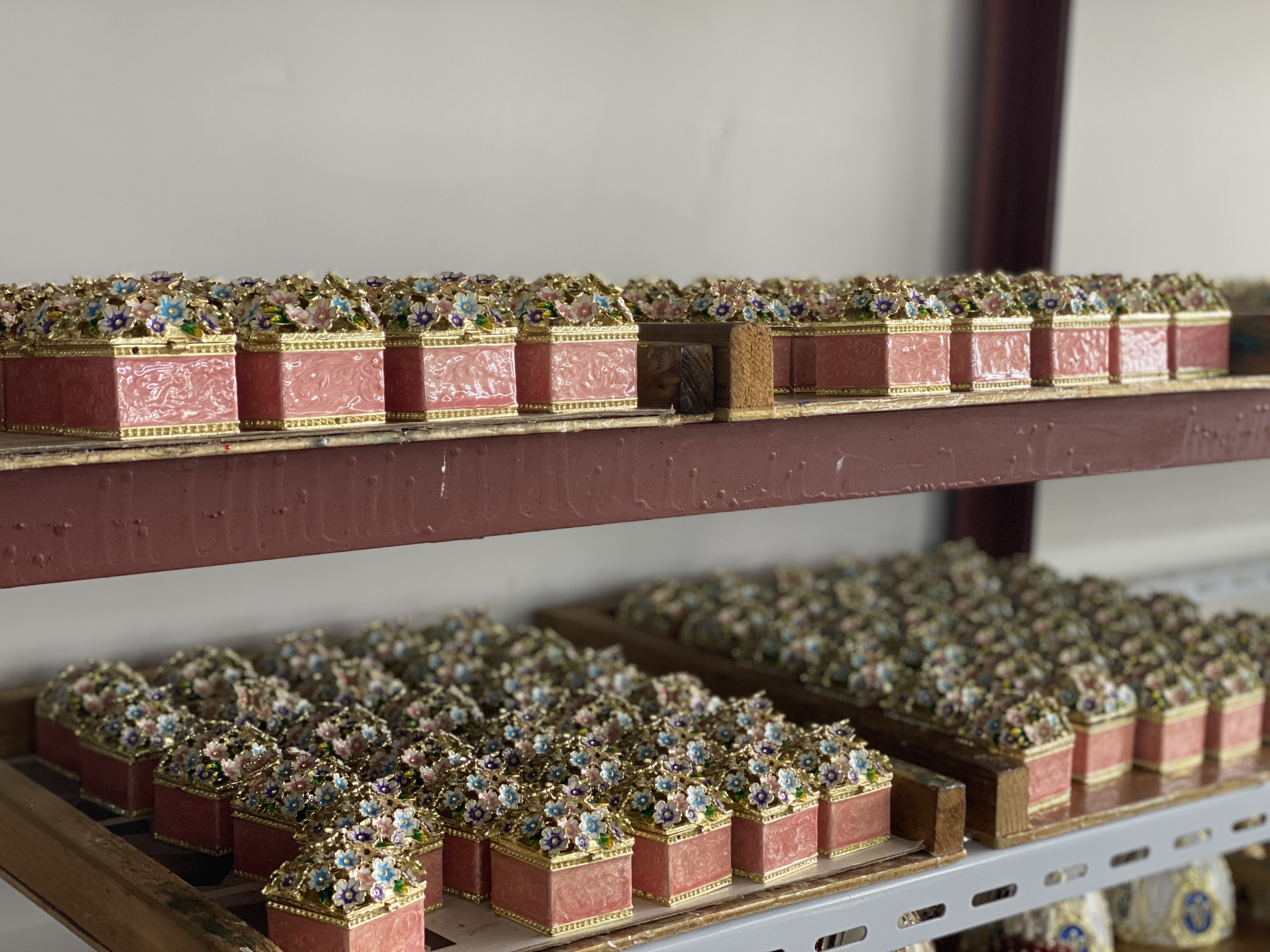
Batch Appearance
Compare completed pieces with the approved color and finish reference, allowing for normal handwork variation.
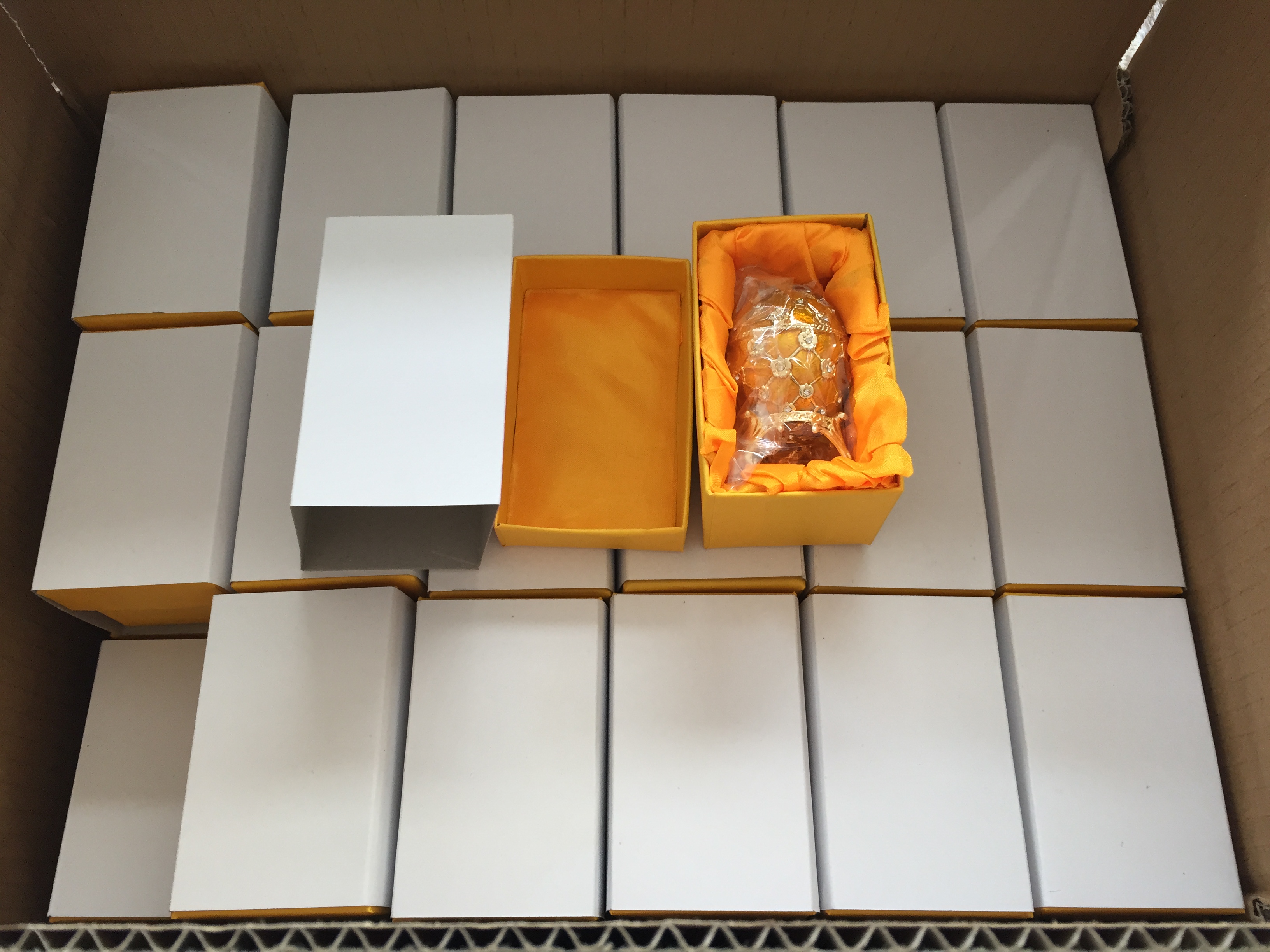
Individual Packaging
Check presentation and protection before goods are packed for dispatch.
From an Early Idea to an Approved Sample
A complete engineering drawing is helpful but not required to begin. A buyer can share a sketch, reference photo, AI-generated concept or written description. The first step is a feasibility review: which materials and processes could achieve the intended form, what details need simplification, and which parts may need specialist support. An early budget range can be discussed before the design is final; a refined quotation follows once material, dimensions, tooling, finish, quantity and packaging are confirmed.
For a productive first review, send the intended use, approximate size, target quantity, preferred metal and finish, must-keep details, logo placement, packaging needs and timing. We can then identify the decisions that belong in the sample rather than make unsupported promises about cost or lead time.
Explore relevant work in Metal Trinket Boxes, Metal Fabergé Eggs and Metal Christmas Ornaments, or see our Case Studies for project context.
Have a Design to Evaluate?
Send a concept, sketch or reference image. We can discuss a realistic forming, finishing and sampling route for your order.
Discuss Your Project