Recreating the First Fabergé Egg (1885): A Study in Metal Craftsmanship
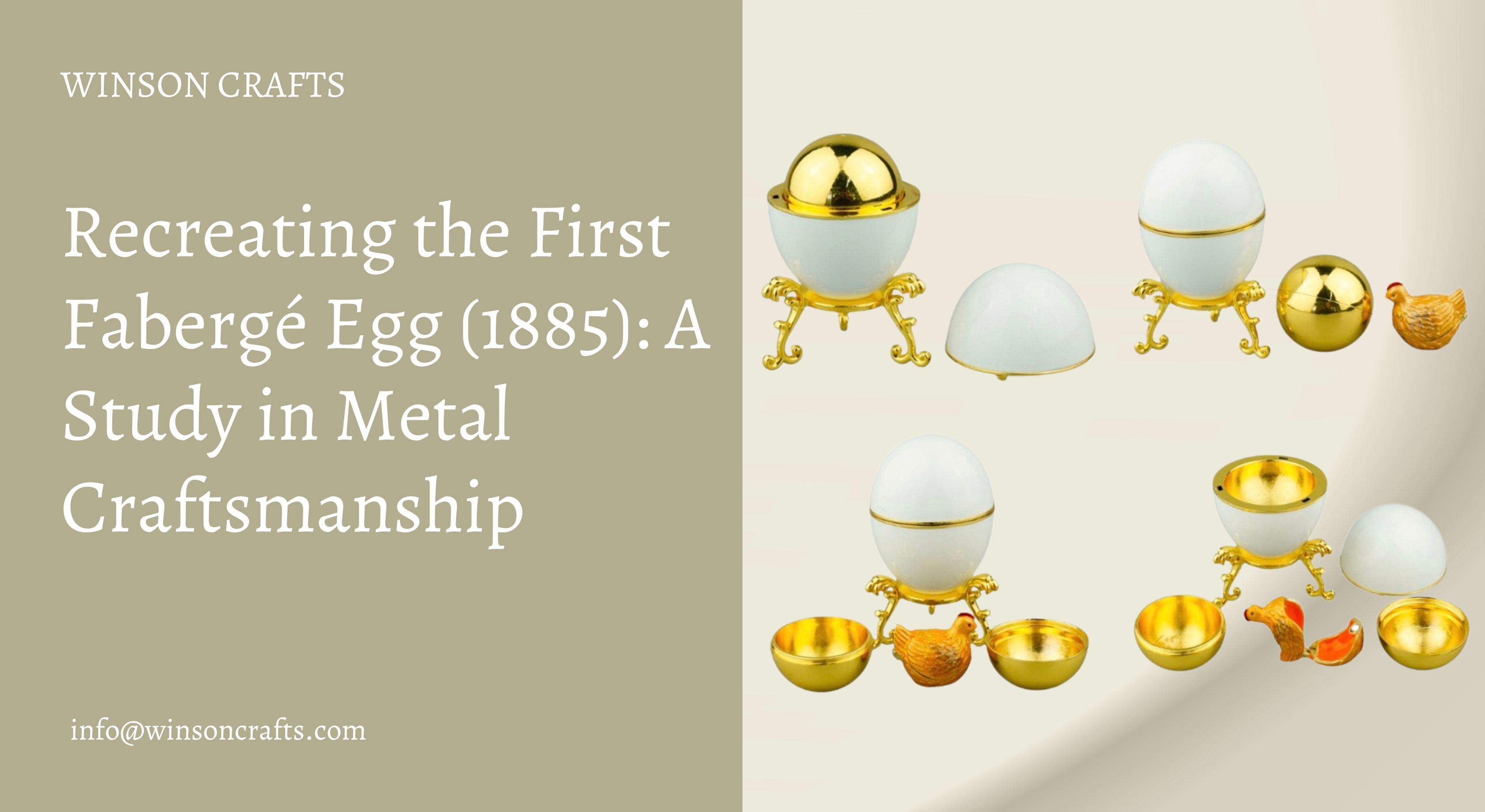
A Modern Interpretation Through Metal Craftsmanship
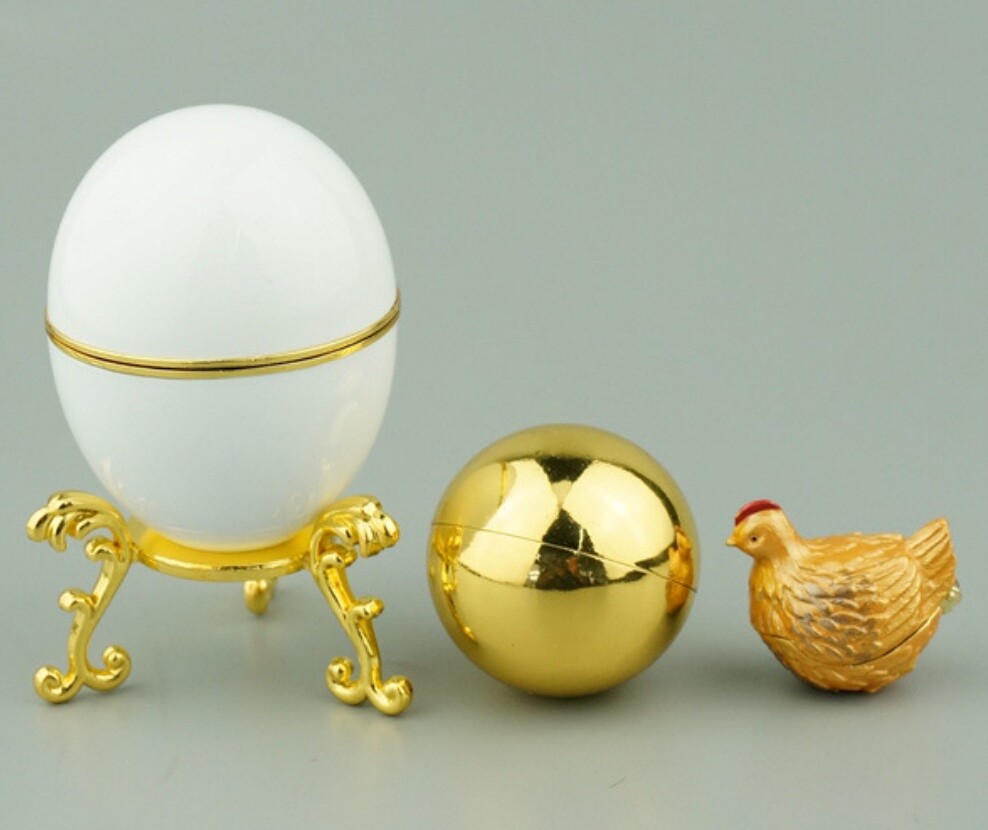
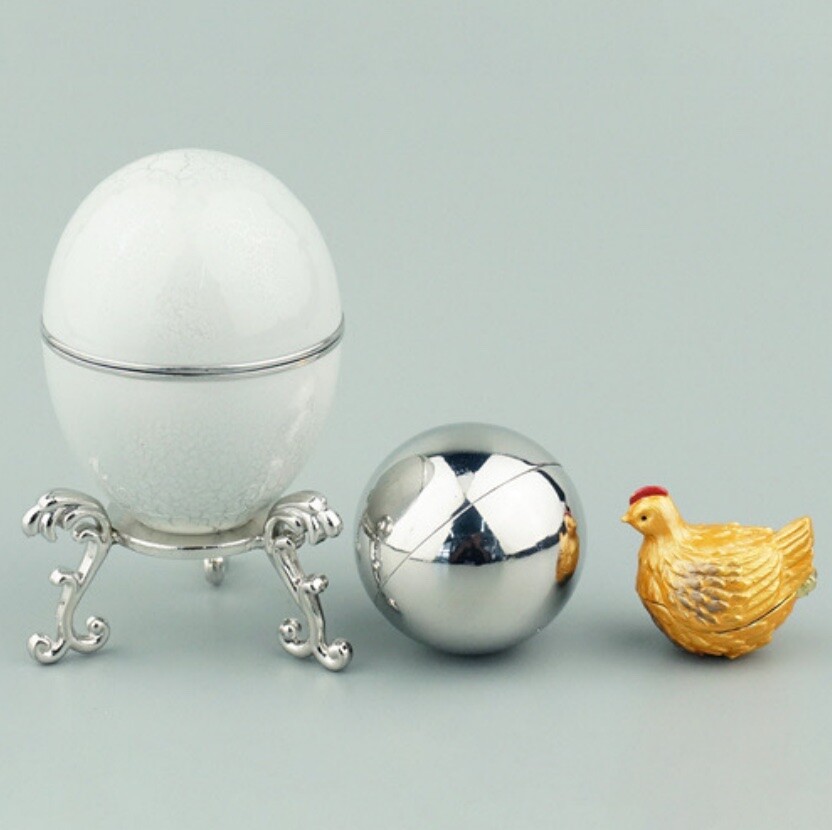
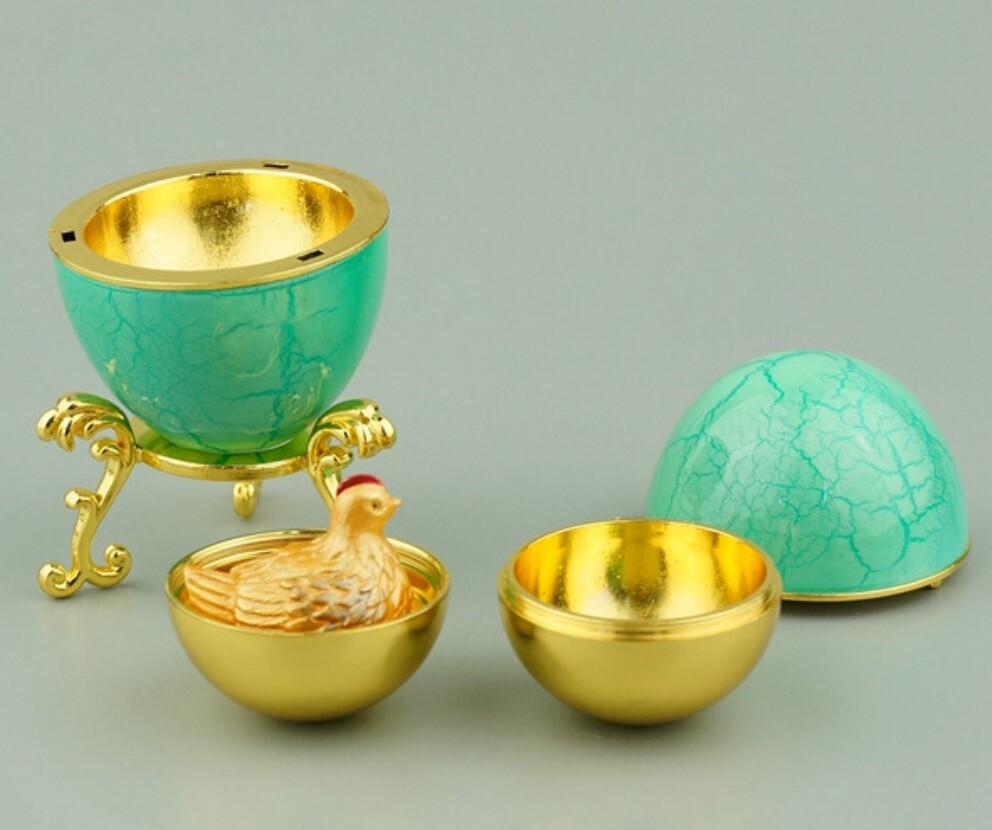
In 1885, the very first Fabergé egg—later known as the Hen Egg—was created for Tsar Alexander III of Russia. What appeared to be a simple white egg concealed a carefully layered surprise inside: a golden yolk, which opened to reveal a finely crafted golden hen.
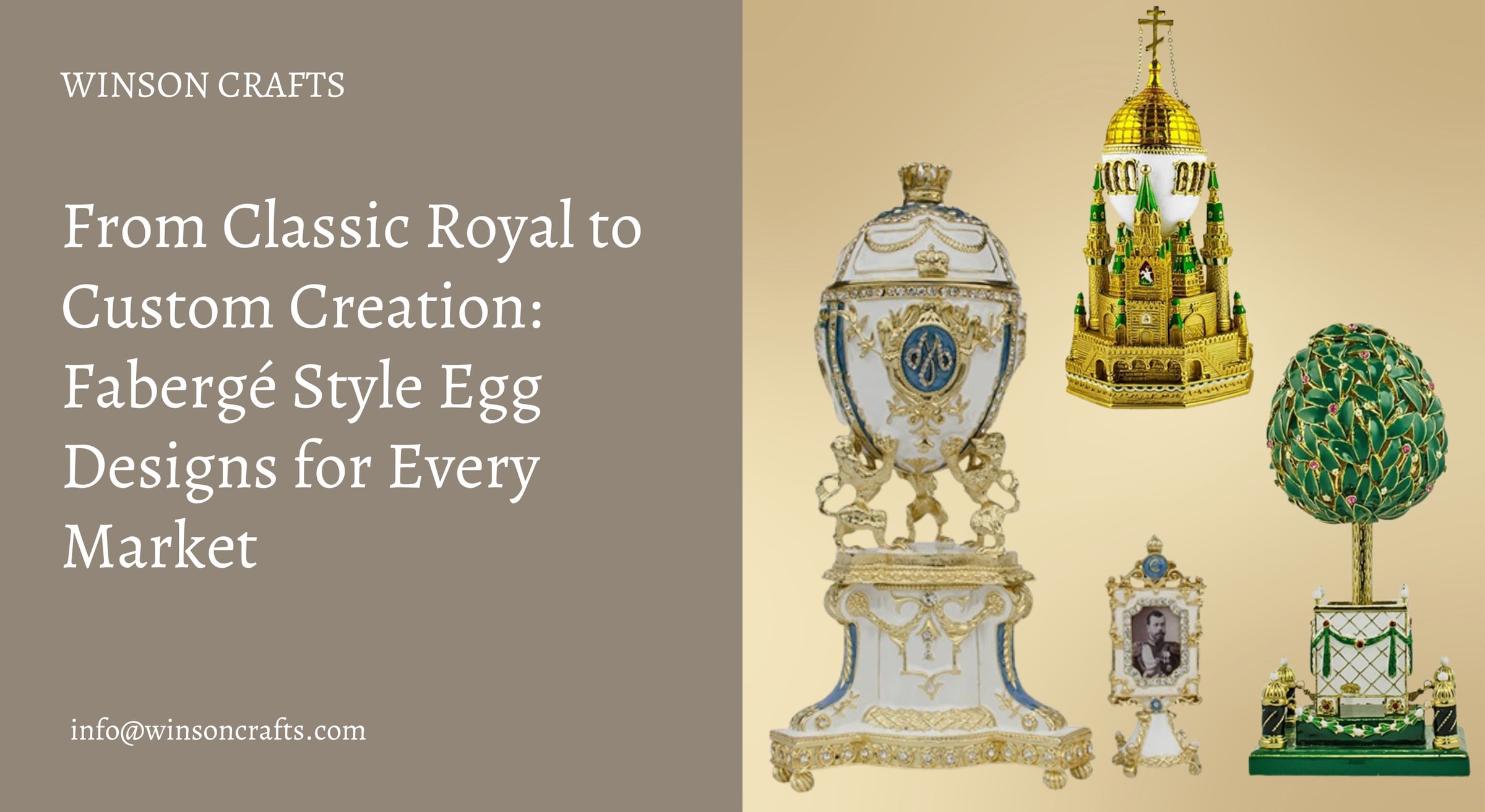
Our reproduction honors the original design while going beyond a direct replica. We faithfully preserve the classic structure and proportions of this historic masterpiece, while reinterpreting it through our expertise in modern metal craftsmanship—introducing diversified techniques and new possibilities unique to contemporary metal giftware.
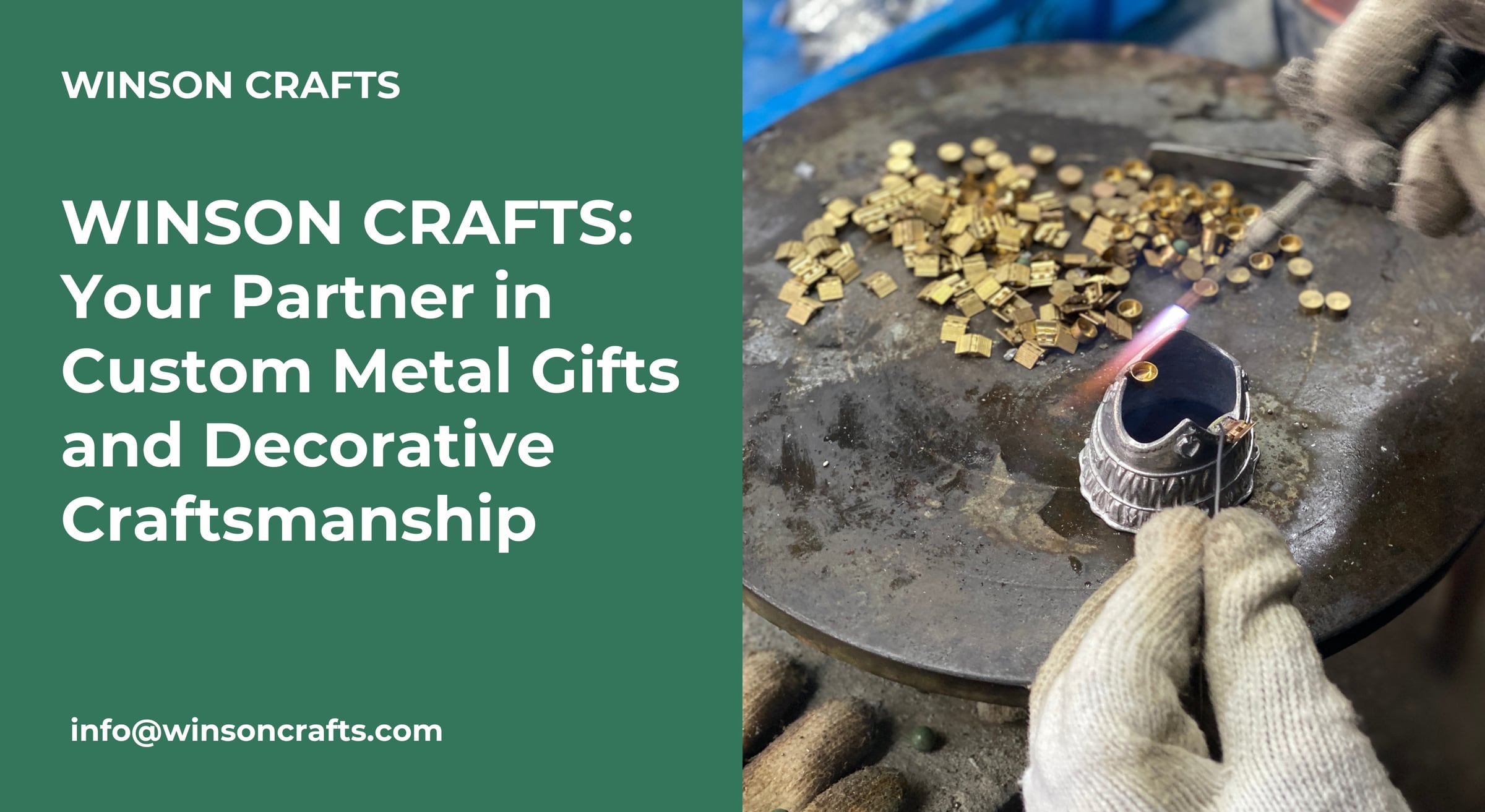
Steel Mold Die Casting: Precision at the Core
Both the outer egg shell and the golden yolk are made of zinc alloy using steel mold die casting.
Steel molds allow us to achieve:
- Excellent dimensional accuracy
- Uniform thickness and structural stability
- Smooth metal surfaces ideal for premium finishes
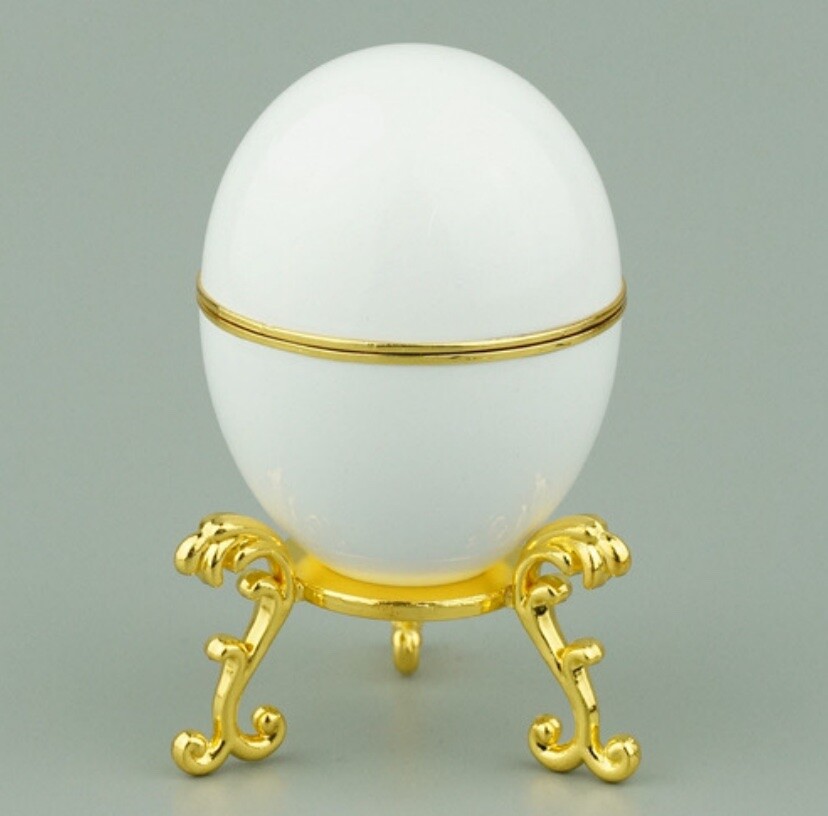
The outer egg shell is carefully polished and then hand-painted with white enamel. Although visually minimal, white enamel is one of the most unforgiving finishes—any surface imperfection becomes immediately visible, demanding extremely high standards in both casting and surface preparation.
Enamel Eggshell Crackle Finishes: Expanding a Classic for More Collectors
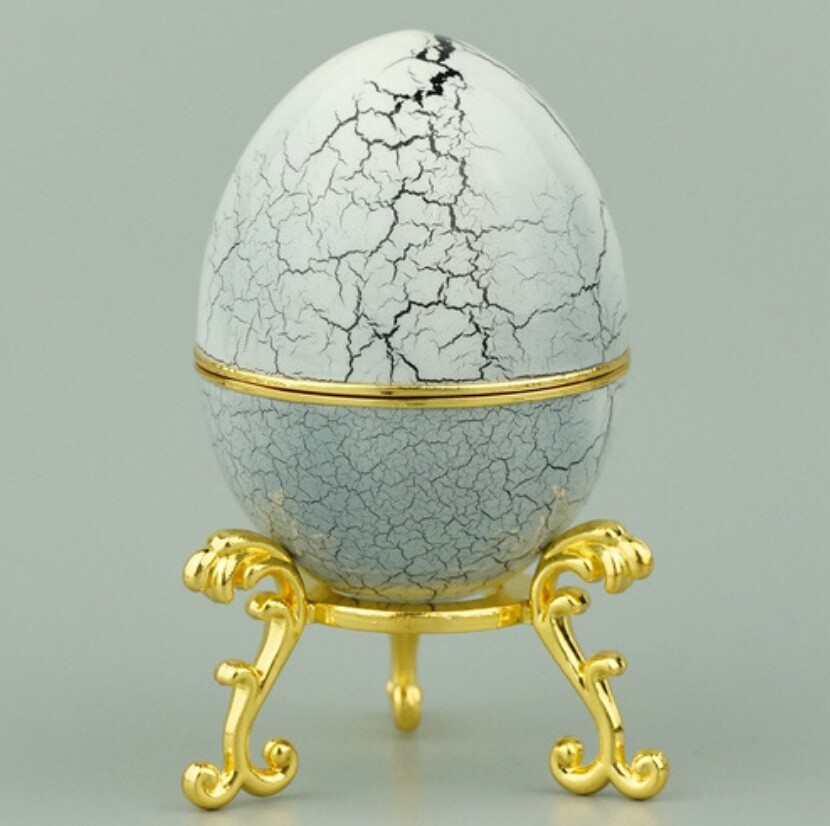
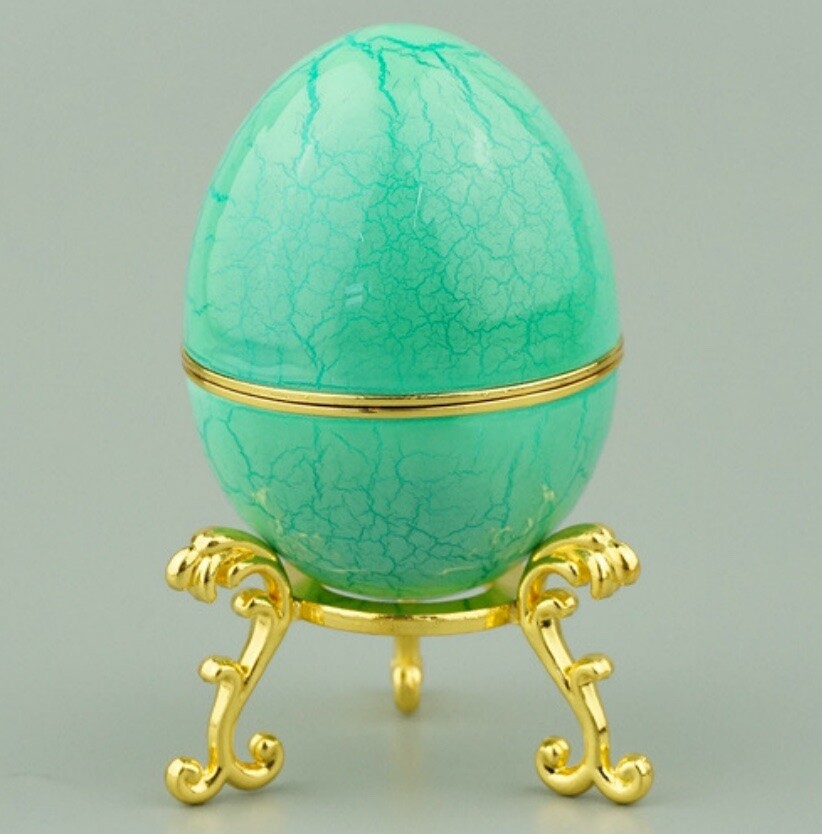
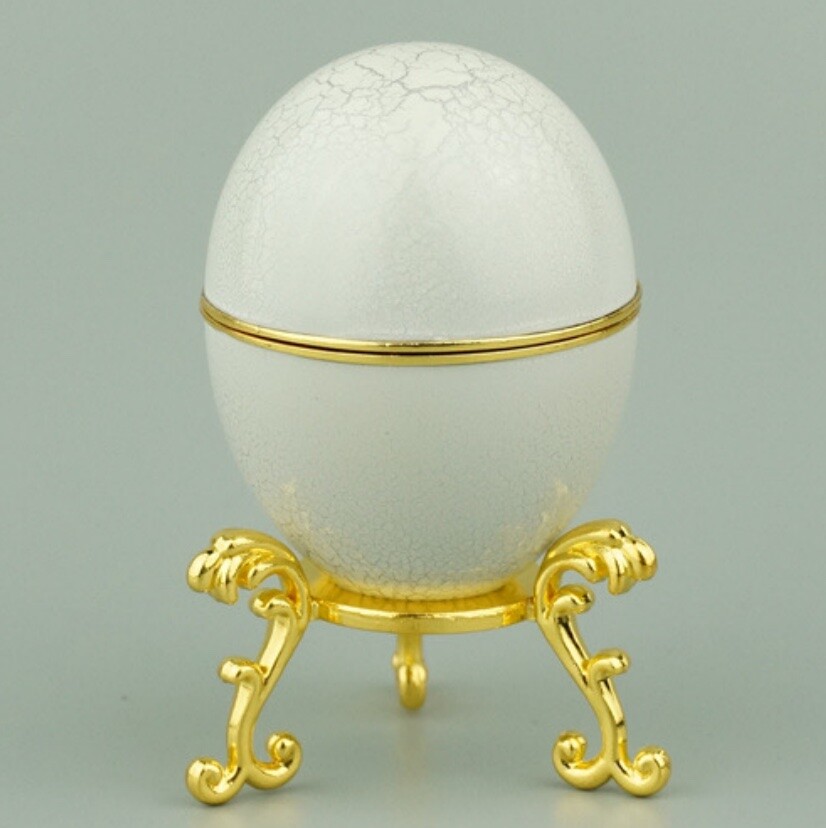
Beyond the classic solid white enamel finish, we also developed eggshell crackle enamel effects for this design. This surface treatment recreates the subtle aging and texture often associated with historic ceramic glazes, while remaining fully controlled and repeatable in metal craftsmanship.
The crackle finishes are available in white, soft grey, and blue, offering distinct visual characters while preserving the original form of the egg. Each color variation appeals to different aesthetic preferences—ranging from purist collectors to those who appreciate a more decorative or contemporary interpretation.
By introducing multiple crackle enamel options, we expand this iconic design beyond a single expression, making it accessible to a wider audience of collectors, retailers, and heritage-inspired gift markets, while maintaining respect for the original 1885 design language.
High-Gloss Gold Plating on the Golden Yolk
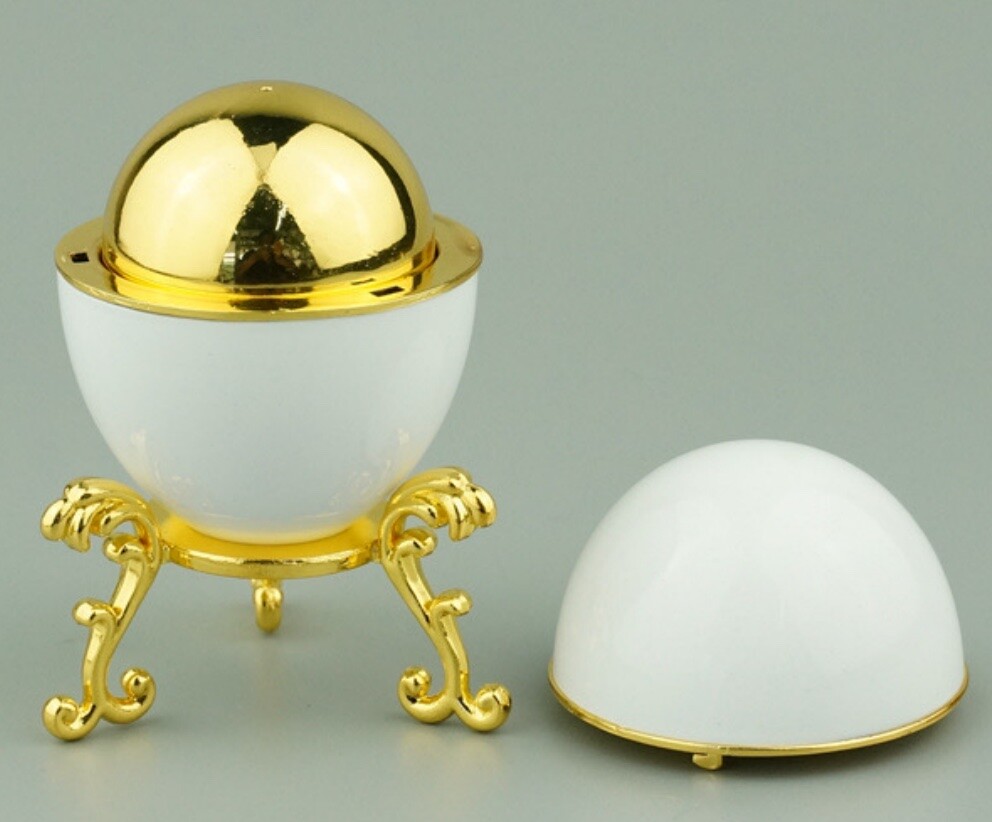
The golden yolk is intentionally left free of additional color or enamel decoration. Its visual impact relies entirely on high-gloss gold electroplating applied over a perfectly prepared metal base.
This process places strict demands on quality control:
- Even the smallest surface defect is amplified after plating
- Polishing consistency is critical
- Plating thickness, adhesion, and color tone must be precisely controlled
For mirror-finish products like this, plating quality is not decorative—it defines the value of the piece.
Mechanical Structure & Assembly
The golden yolk opens and closes via a precision screw-knob mechanism, recreating the ceremonial experience of the original design. This requires tight tolerances and consistent dimensions, made possible by steel mold production.
The outer egg shell is secured using a snap-fit closure system. Thanks to the dimensional stability of steel molds, the shell aligns cleanly with minimal seam visibility—avoiding the large gaps often seen in resin-mold egg production, which typically require manual reshaping during assembly.
Combining Steel Mold and Rubber Mold Techniques
Not all components are suited to the same manufacturing method.
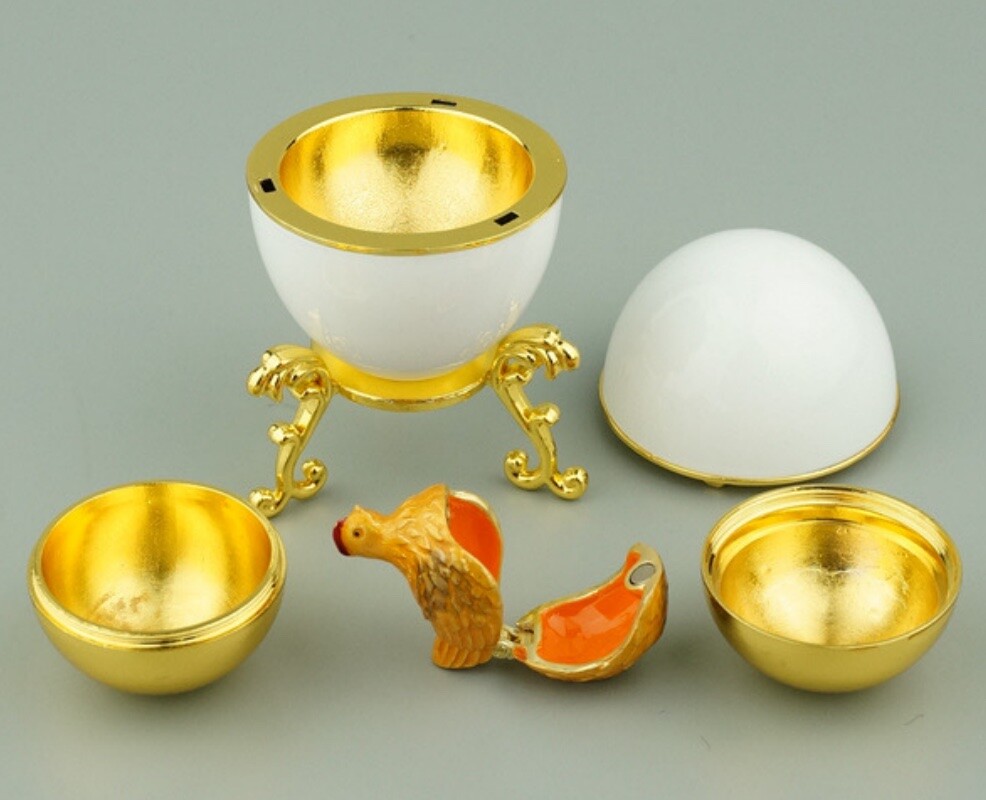
The base stand and the hen figure are produced using rubber molds, which are better suited for:
- Complex three-dimensional forms
- Fine sculptural details
- Organic shapes such as feathers and posture
The hen is fully hand-painted with enamel, with both interior and exterior surfaces finished by skilled craftsmen to achieve depth and richness of color.
The hen figure is not merely decorative—it is designed as a mini hinged trinket box, staying true to the spirit of surprise that defines the original Fabergé concept.
By combining the precision of steel molds with the flexibility of rubber molds, we can faithfully reproduce both the structural accuracy and artistic details of the original design.
Expanding the Surprise: Alternative Mini Charms Inside
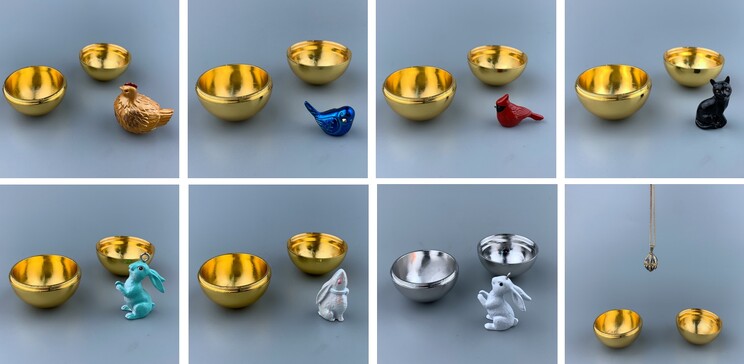
Beyond recreating the original hen motif, we have also developed alternative mini charms designed to be placed inside the hinged trinket box. These include figures such as rabbits, small birds, and even Fabergé-style egg pendants, offering fresh interpretations while preserving the spirit of surprise that defines this historic design.
These interchangeable interior elements allow the same egg structure to speak to different themes, audiences, and market preferences—from Easter-inspired collectibles to nature-themed gifts or jewelry-focused designs.
In addition to our existing charm options, we also support custom development based on your target customers’ needs, whether that means adapting an existing motif or creating an entirely new miniature form. This flexibility enables brands, museums, and retailers to build exclusive variations while remaining anchored to a classic, recognizable design.
A Reproduction That Reflects Craft Capability
This piece is more than a historical replica—it is a comprehensive showcase of our manufacturing capabilities:
- Steel mold die casting & rubber mold casting
- High-standard gold electroplating
- Hand-applied enamel painting
- Mechanical structure design & precision assembly
Building on this foundation, we support full customization for collectible and branded giftware, including:
- Multiple metal materials and finishes
- Custom plating colors and surface effects
- Enamel color customization
- Structural, size, and design adaptations
Whether for museum-inspired collections, luxury giftware, or brand-exclusive interpretations, we offer end-to-end solutions from concept development to finished production. E-mail: info@winsoncrafts.com